How FOMO Leads to Trading Mistakes
FOMO can push traders into chasing prices, overtrading, taking oversized positions and ignoring their trading plans. Learn how to identify FOMO and build a more disciplined trading process.
How FOMO Leads to Trading Mistakes
The fear of missing out, commonly known as FOMO, is one of the most common psychological challenges faced by traders. A stock suddenly rises, social media becomes filled with bullish posts, and a trader starts thinking, “If I do not enter now, I will miss the opportunity.”
That emotional reaction can turn a carefully planned trading strategy into an impulsive decision. Instead of entering because a setup meets predefined conditions, the trader enters because the price is moving quickly.
Understanding fomo trading mistakes is important because FOMO does not usually appear as one obvious mistake. It can affect entry timing, position size, stop-loss decisions, profit-taking and even the number of trades taken during a session.
Key Takeaway
FOMO can make traders chase price movements, enter without confirmation, increase position sizes, overtrade and ignore their trading plans. The best defense is a predefined process that separates market analysis from emotional decisions.
What Is FOMO in Trading?
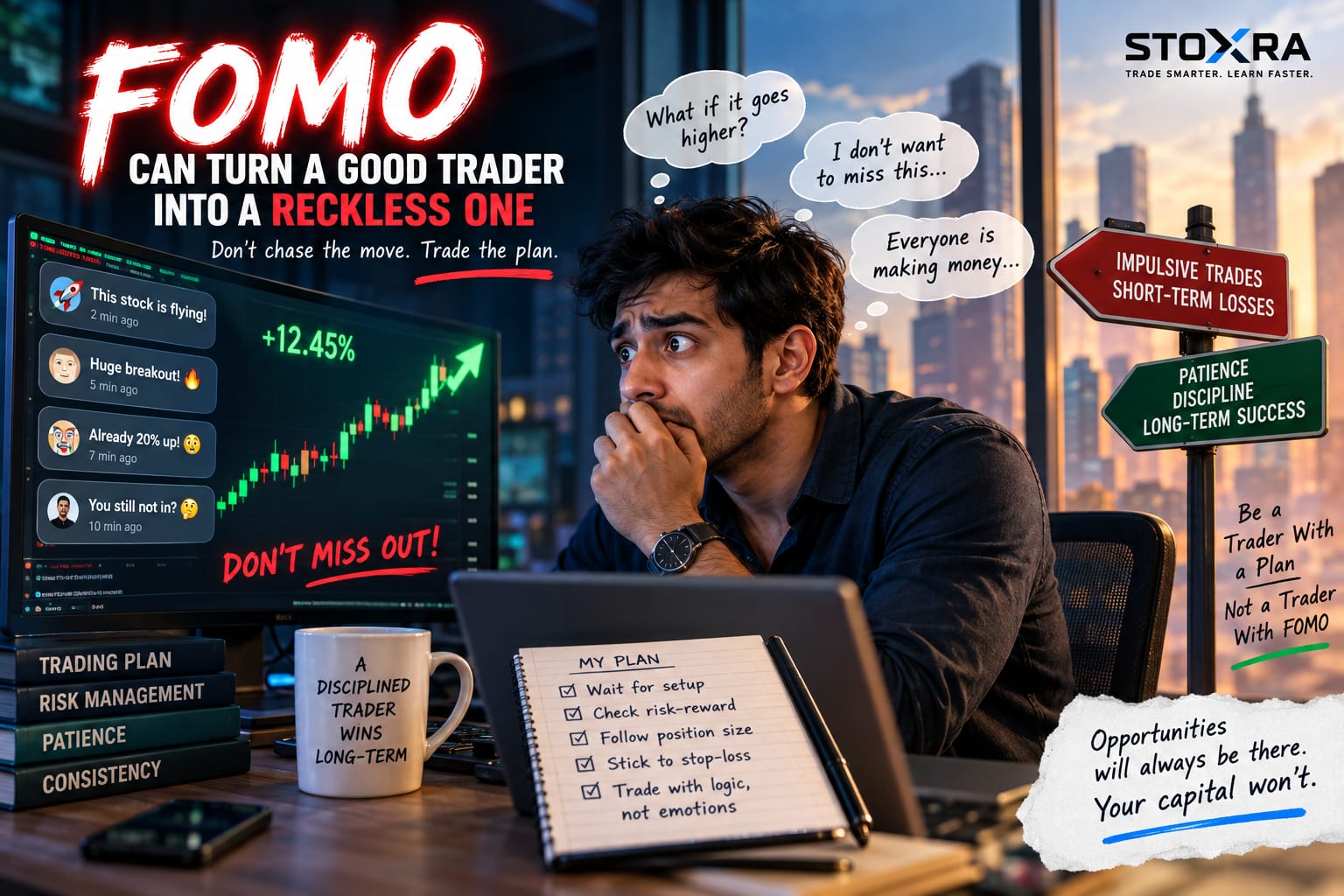
FOMO in trading is the fear that another trader is making money from a market move while you are sitting on the sidelines. It often becomes stronger when a stock rises rapidly or when traders see screenshots of profitable trades online.
The problem is not simply wanting to make a profit. The problem begins when the fear of missing an opportunity becomes more powerful than the trading plan.
For example, a trader may have planned to buy a stock only after a specific breakout confirmation. If the stock suddenly moves upward before that confirmation, FOMO may convince the trader to enter anyway.
In that situation, the trader is no longer following the original setup. The decision is being driven by urgency.
Why Does FOMO Happen in the Stock Market?
Markets naturally create situations where traders feel that they are missing an opportunity. Prices can move quickly, news can spread instantly, and social media can make successful trades look more common than they actually are.
Several factors can increase FOMO:
- Rapid price movement: A stock suddenly moves sharply higher or lower.
- Social media influence: Traders repeatedly see others discussing profitable positions.
- Previous missed opportunities: A trader remembers a stock that rose after they stayed out.
- Overconfidence: Previous profitable trades can create excessive confidence.
- Fear of regret: The trader worries more about missing the move than about losing money.
- Lack of a trading plan: Without predefined rules, emotions can easily control decisions.
FOMO is therefore closely connected to trading psychology. The same market movement can be interpreted differently by a disciplined trader and an emotionally driven trader.
How FOMO Leads to Trading Mistakes
FOMO can change the way a trader evaluates risk and opportunity. A normal trading decision asks whether a setup has a favorable risk-reward relationship. A FOMO-driven decision often asks a different question: “How quickly can I get into this trade?”
This shift in thinking can create a chain of mistakes. An impulsive entry may lead to a larger-than-planned position. A sudden pullback may then trigger panic. The trader might move the stop-loss, exit too early or take another trade to recover the loss.
This is why FOMO should not be viewed as only an entry problem. It can influence the entire trade lifecycle.
Common FOMO Trading Mistakes
1. Chasing the Price
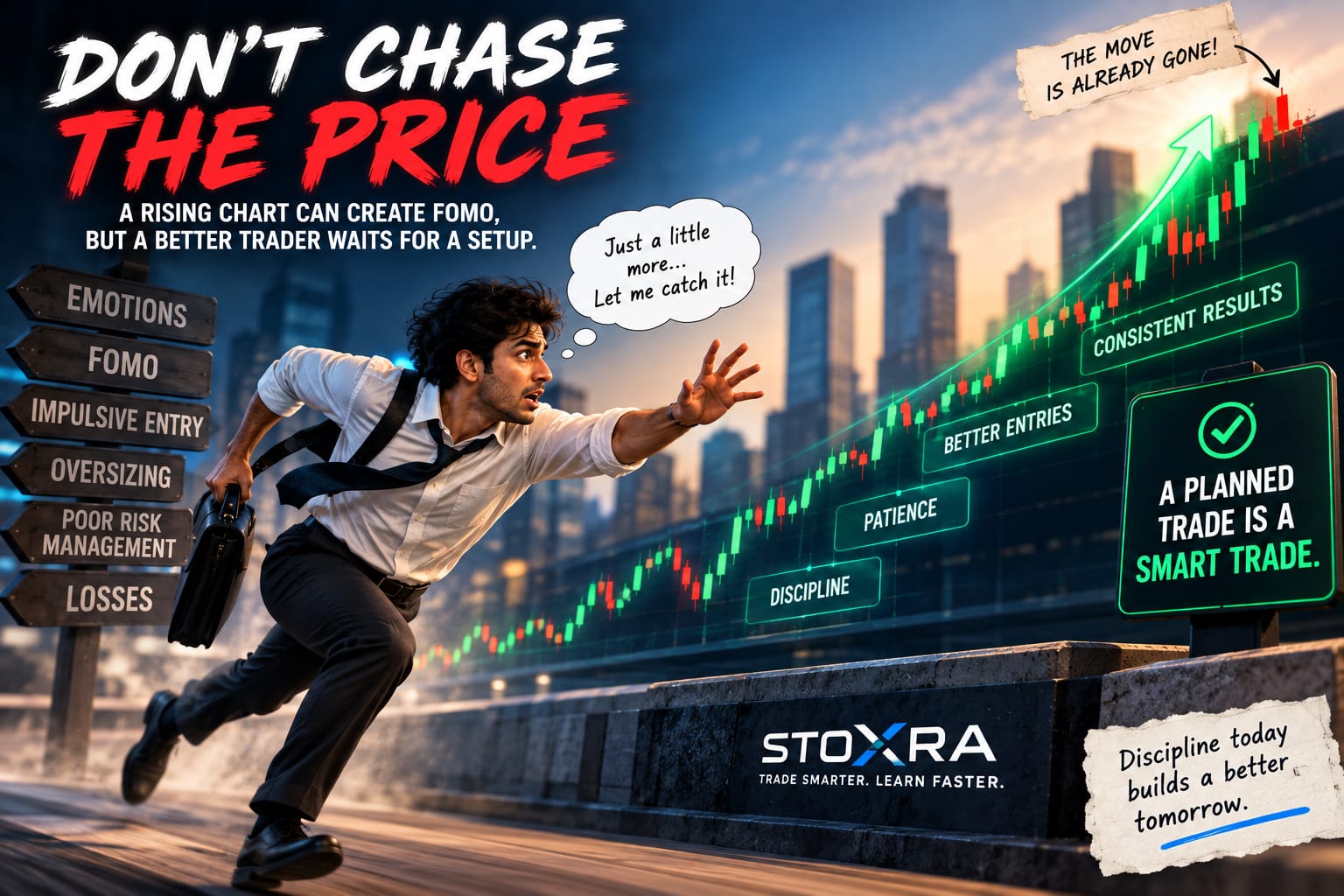
A trader sees a stock rising quickly and enters after a large part of the move has already happened.
2. Entering Without Confirmation
Instead of waiting for the planned technical or fundamental confirmation, the trader enters because the market appears to be moving.
3. Taking a Large Position
The trader increases the position size because they believe the opportunity is too good to miss.
4. Overtrading
After missing one move, the trader may take several additional trades in an attempt to find another opportunity.
5. Moving the Stop-Loss
A trader may refuse to accept a planned loss and move the stop farther away from the original level.
6. Ignoring the Trading Plan
Rules that were created before the trade are abandoned once emotions become stronger.
FOMO and Chasing Price After a Big Move
One of the clearest examples of FOMO occurs after a large price movement. Imagine that a stock rises 8% in a short period and attracts significant attention.
A trader who was not involved may feel pressure to enter immediately. However, a strong move does not automatically mean that entering at the current price is a good decision.
The trader should still evaluate the setup, potential risk, liquidity, volatility and predefined entry conditions.
Pro Tip
You do not have to participate in every market move. Missing a trade is usually less damaging to a trading account than taking an unplanned trade with uncontrolled risk.
How FOMO Causes Overtrading
FOMO and overtrading can form a dangerous cycle. A trader misses a move, feels frustrated, and starts searching for another trade immediately.
The next trade may not satisfy the trader's normal criteria. If that trade fails, frustration can increase and lead to another impulsive decision.
Eventually, the trader may take many trades that were never part of the original plan.
One practical way to reduce this behavior is to define a maximum number of trades or a daily loss limit before the trading session begins.
For additional risk-management guidance, read: Daily Loss Limit in Intraday Trading .
FOMO and Poor Position Sizing
Position sizing is another area where emotional decisions can create unnecessary risk.
When traders believe they are witnessing a rare opportunity, they may allocate more capital than their normal rules allow. The reasoning can sound convincing: “This move is too strong to miss.”
But market certainty is extremely difficult to achieve. A strong move can reverse, consolidate or become highly volatile.
A predefined position-sizing method helps keep one emotional decision from having an outsized effect on the account.
You can also learn more from STOXRA's guide on position sizing for intraday trading .
FOMO Can Damage Stop-Loss Discipline
A trader affected by FOMO may enter a position without properly defining the invalidation point. Once the market moves against the position, the trader may hesitate to exit.
Common emotional reactions include moving the stop-loss farther away, removing the stop entirely or waiting for the position to “come back.”
These actions can transform a small planned loss into a much larger one.
Important Warning
A stop-loss is not a guarantee against every type of market loss, especially during gaps or extreme volatility. Traders should understand the risks of their instrument and trading method before placing a trade.
FOMO Trading Mistakes in Bull and Bear Markets
FOMO is not limited to bullish markets. It can appear in both rising and falling markets.
FOMO During a Bull Market
In a strong bull market, traders may fear that prices will continue rising without giving them another entry opportunity. This can lead to chasing extended moves or buying assets without proper analysis.
FOMO During a Falling Market
During sharp declines, FOMO can take a different form. Traders may feel pressure to short immediately because they believe the market will continue falling. Entering after a large decline without a defined setup can expose the trader to sudden reversals.
In both situations, the underlying psychological problem is similar: the trader feels compelled to participate because of the movement itself.
Example of a FOMO Trade
Consider a hypothetical stock trading at ₹500. A trader has a plan to enter only if the stock breaks ₹510 with confirmation.
The stock suddenly jumps from ₹500 to ₹525. The trader watches the move and becomes afraid of missing it. Instead of waiting, they enter at ₹525.
Shortly afterward, the stock pulls back to ₹512.
The trader becomes nervous because the entry was not based on the original plan. They may now either exit emotionally or move their stop-loss.
Notice that the mistake was not simply that the price declined. The key issue was that the trader abandoned the original decision-making process because of FOMO.
FOMO Trade vs Planned Trade
| FOMO-Driven Trade | Planned Trade |
|---|---|
| Triggered by fear of missing out | Triggered by predefined conditions |
| Often enters after a sharp move | Waits for the planned setup |
| Risk may be decided after entry | Risk is considered before entry |
| Position size may increase emotionally | Position size follows predefined rules |
| Stop-loss decisions may change emotionally | Exit conditions are defined in advance |
How to Prevent FOMO Trading Mistakes
Completely eliminating emotions from trading is unrealistic. A more practical goal is to create a process that prevents emotions from controlling important decisions.
1. Create Entry Rules Before the Market Moves
Define what must happen before entering a trade. Your rules can include technical confirmation, price levels, volume conditions, risk limits or other criteria relevant to your strategy.
2. Define Risk Before Entry
Know how much you are willing to risk before entering. This makes it harder to increase risk simply because the market is moving quickly.
3. Accept That Some Trades Will Be Missed
No trader can capture every profitable move. Accepting missed opportunities reduces the pressure to enter every time a stock starts moving.
4. Use a Daily Loss Limit
A daily loss limit can prevent emotional trading from continuing after a difficult start.
5. Avoid Making Decisions From Social Media Alone
Social media can provide ideas, but it should not replace independent analysis and risk assessment.
6. Take a Pause Before an Impulsive Entry
If you suddenly feel that you “must enter right now,” pause. Ask yourself whether the setup meets your predefined rules.
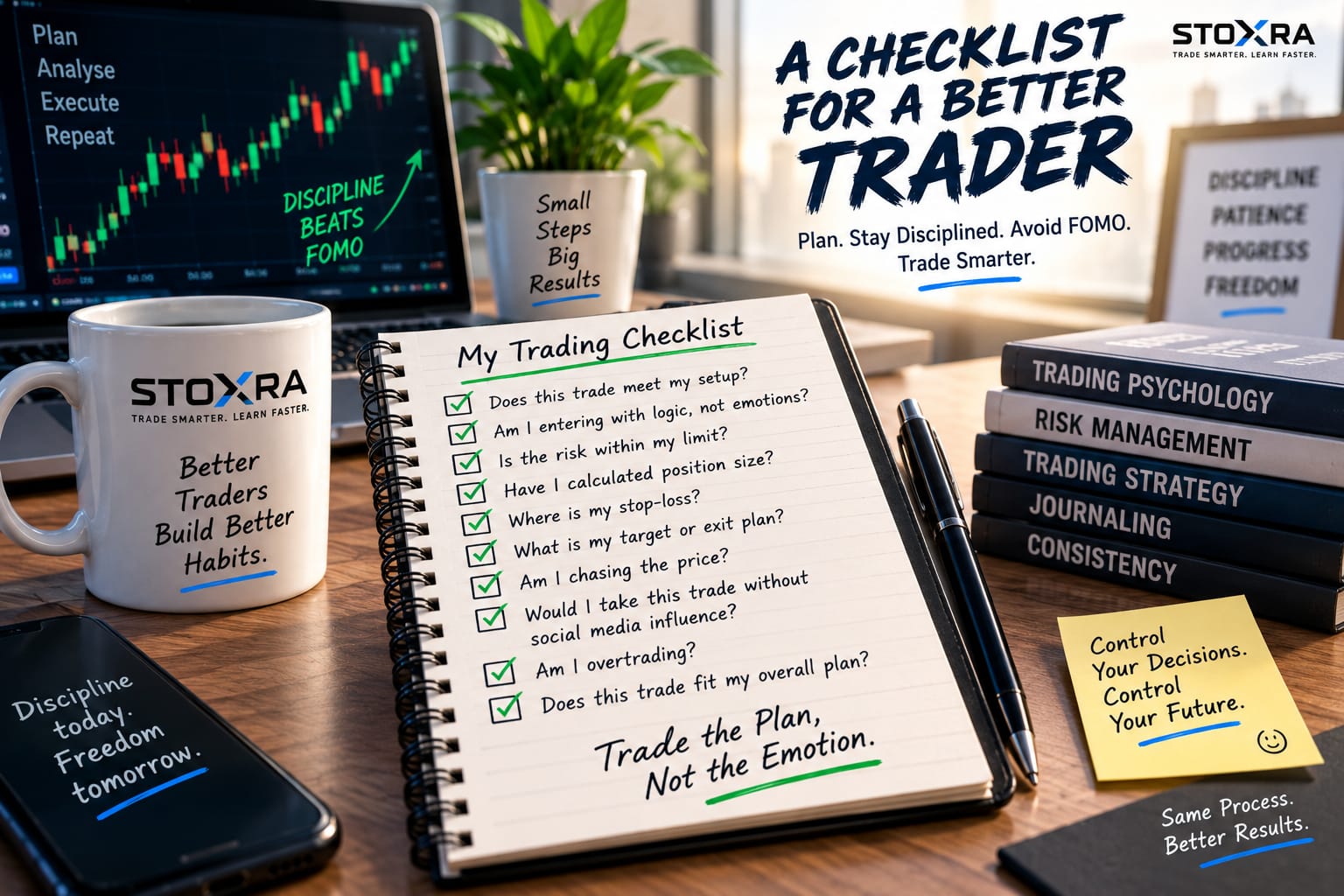
Practical FOMO Trading Checklist
- Does this trade meet my predefined setup?
- Am I entering because of analysis or because the price is moving quickly?
- Have I already missed the ideal entry?
- Is the current risk within my normal limit?
- Have I calculated the appropriate position size?
- Where is my invalidation level?
- Where is my planned exit?
- Would I still take this trade if I had not seen other traders discussing it?
- Am I taking this trade because I missed another trade?
- Can I explain the reason for entering in one clear sentence?
How a Trading Journal Can Help With FOMO
A trading journal can help identify repeated emotional patterns. Instead of only recording entry price and exit price, traders can record the reason behind each decision.
Useful journal questions include:
- Did I follow my trading plan?
- Did I feel rushed before entering?
- Did I chase the price?
- Did I increase my position because of excitement or fear?
- Did I move my stop-loss after entry?
- Was the trade part of my original plan?
Over time, these records can reveal whether FOMO is responsible for a meaningful portion of a trader's mistakes.
Risk Management Is the First Defense Against Emotional Trading
Trading psychology and risk management are closely connected. When a trader knows the maximum amount they are prepared to risk, an individual trade may feel less emotionally overwhelming.
A useful risk-management framework can include position sizing, stop-loss rules, daily loss limits and clear trade invalidation conditions.
For a broader introduction, see Intraday Risk Management for Beginners .
Traders can also learn about how the expected profitability of a strategy differs from simply having a high win rate through Trade Expectancy vs Win Rate .
Can AI and Automation Help Reduce Emotional Trading?
Technology can help traders structure and automate parts of their process, but it does not eliminate market risk or guarantee better returns.
Depending on the platform and strategy, tools may help with alerts, screening, data analysis, journaling or rule-based execution.
The important point is that technology should support a defined strategy rather than become another source of impulsive signals.
If you are interested in the broader role of AI in market analysis, explore AI Tools for Stock Market Analysis in India .

How to Build a More Disciplined Trading Process
The strongest way to deal with FOMO is not to fight every emotion in real time. Instead, build rules before the emotional situation occurs.
- Define your trading setup.
- Define the conditions required for entry.
- Define the maximum acceptable risk.
- Calculate position size before entering.
- Define the invalidation level.
- Define your exit conditions.
- Set limits for the number of trades or daily losses.
- Review your decisions in a trading journal.
The goal is not to predict every market move. The goal is to make consistent decisions based on a repeatable process.
Frequently Asked Questions About FOMO Trading Mistakes
What does FOMO mean in trading?
FOMO means “fear of missing out.” In trading, it describes the psychological pressure to enter a market because a trader believes an opportunity may disappear.
Why is FOMO dangerous for traders?
FOMO can encourage impulsive entries, excessive position sizes, overtrading and poor stop-loss discipline. These behaviors can increase risk when they are not part of a predefined trading plan.
How can I stop chasing stocks?
Use predefined entry rules and accept that some market moves will be missed. A checklist can also help you determine whether you are entering because of a valid setup or because of emotional pressure.
Does FOMO always lead to losses?
No. A FOMO-driven trade can sometimes be profitable. However, a profitable outcome does not automatically make the decision-making process sound. The bigger concern is whether the behavior creates uncontrolled risk over time.
Can a trading plan reduce FOMO?
Yes. A clear trading plan can reduce the number of decisions that must be made emotionally during fast market movements. It can define entry, risk, position size and exit conditions in advance.
Is FOMO only a problem for beginner traders?
No. Experienced traders can also experience FOMO, particularly during unusual market conditions or after a series of missed opportunities. Experience may help with recognition, but emotions remain part of trading psychology.
Final Takeaway
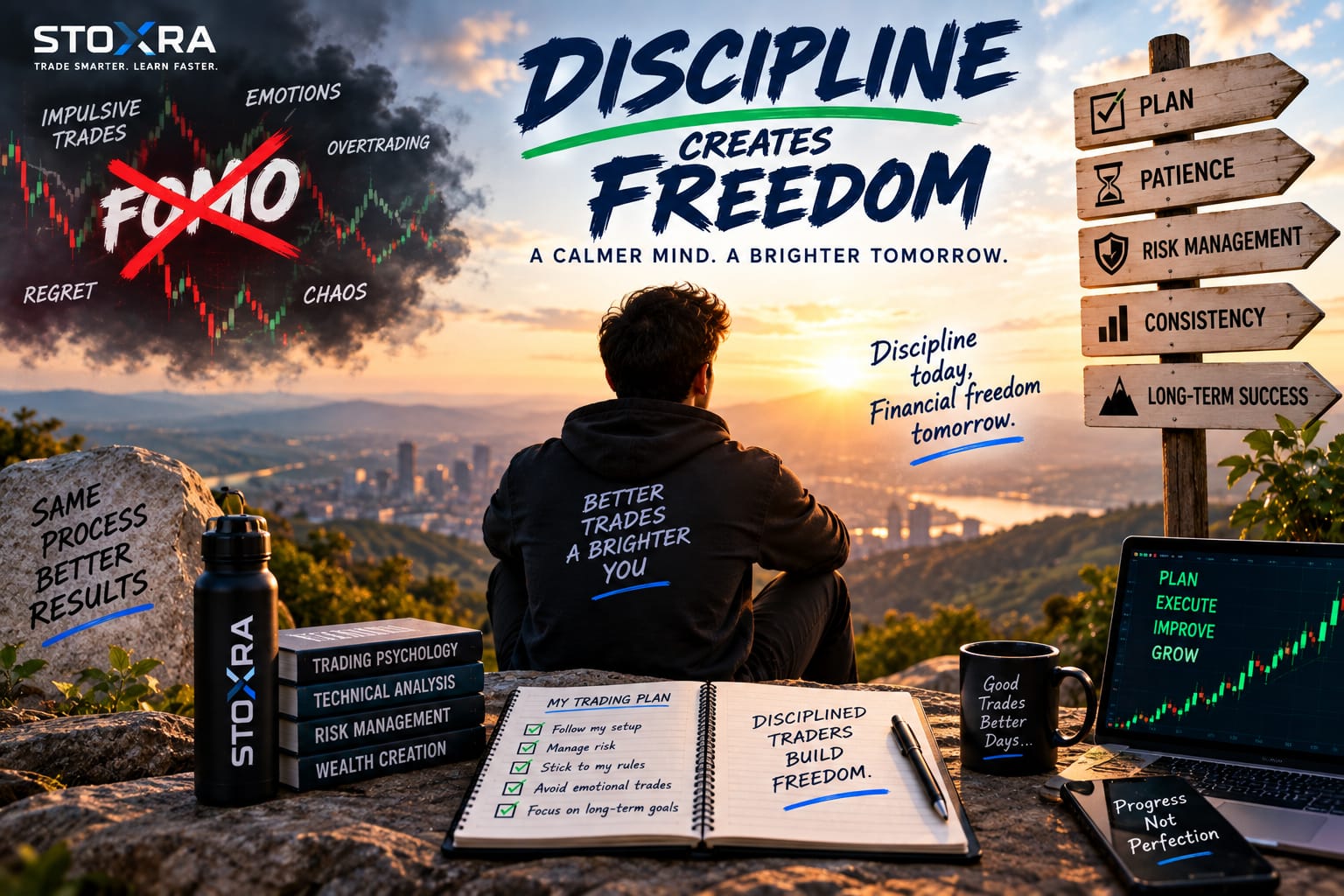
FOMO trading mistakes usually begin with a simple feeling: the fear that a profitable opportunity is disappearing. But that feeling can influence much more than an entry. It can lead to chasing prices, overtrading, oversized positions, moving stop-losses and abandoning a trading plan.
The solution is not to predict every market move or participate in every opportunity. A better approach is to build a repeatable process with clear entry rules, predefined risk, appropriate position sizing and disciplined exits.
Missing a trade is part of trading. Protecting your capital and maintaining discipline are often more important than trying to capture every move.
Trade With a Better Process
Explore STOXRA's educational resources to understand trading psychology, risk management, technical analysis and disciplined decision-making.
Explore STOXRA