How to Set a Daily Profit Target for Intraday Trading
Learn how to set a practical daily profit target for intraday trading while managing risk, avoiding overtrading, controlling position size and maintaining trading discipline.
How to Set a Daily Profit Target for Intraday Trading
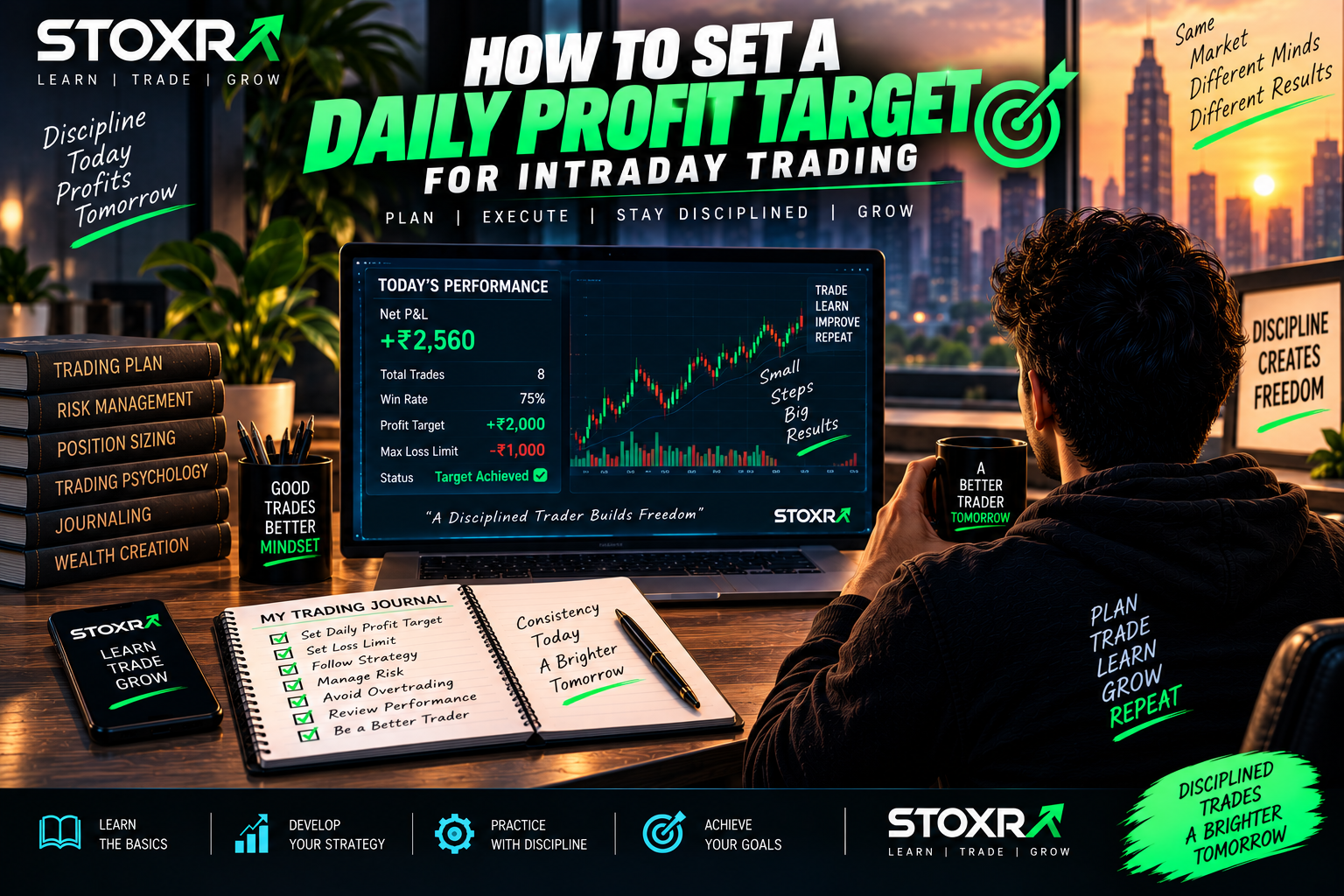
A daily profit target can help an intraday trader define what a successful trading session looks like. But a profit target should never become a compulsory number that forces you to trade. Markets do not owe a trader a fixed amount every day, and attempting to reach a daily target at any cost can lead to overtrading, revenge trading and unnecessary risk.
The better approach is to use a daily target as one part of a complete trading plan. The plan should also include a daily loss limit, position sizing rules, entry criteria, exit rules, maximum number of trades and a clear process for stopping when market conditions are no longer suitable.
What Is a Daily Profit Target?
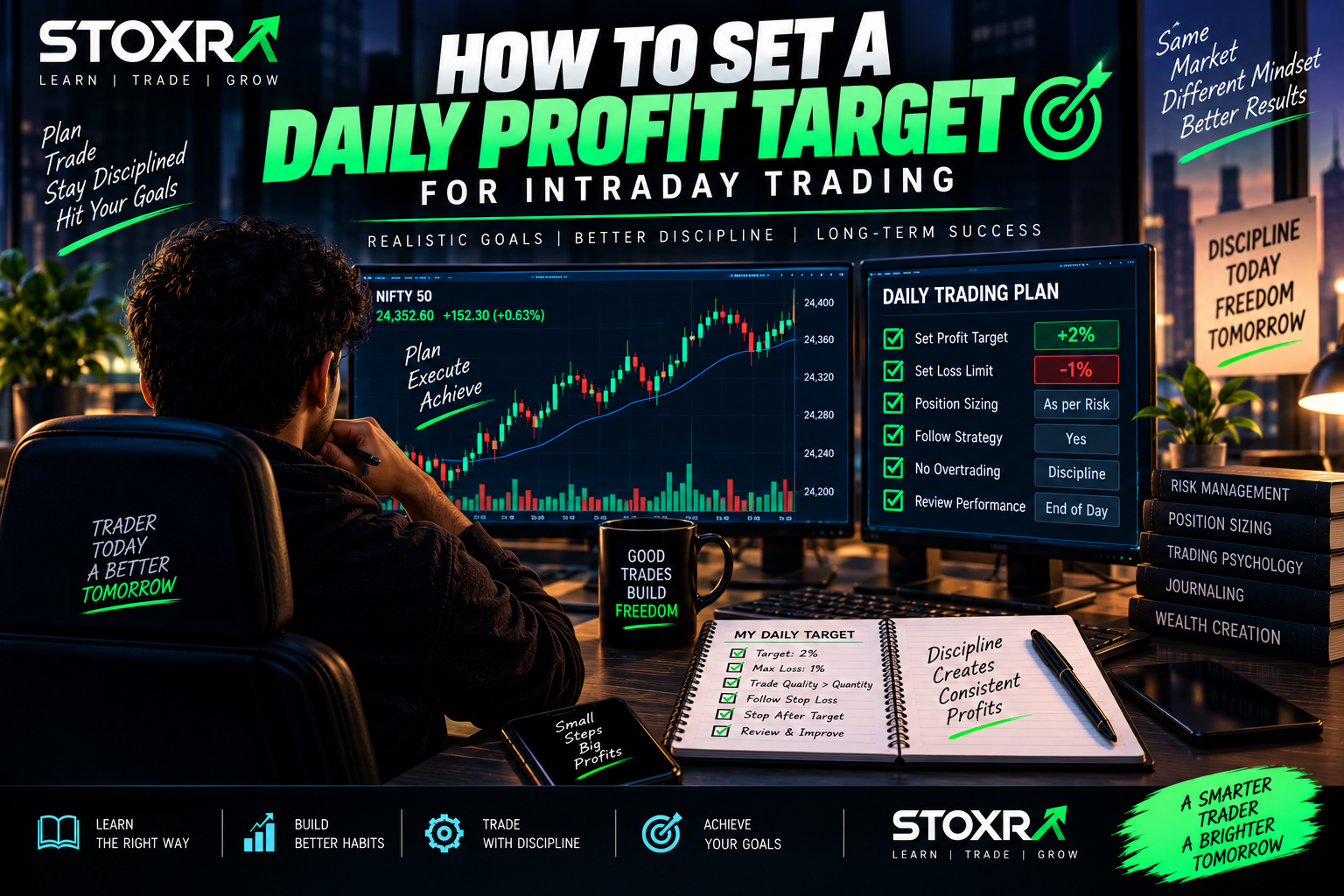
A daily profit target is a predefined amount of profit that a trader may use as a reference for the trading session. For example, a trader might decide that once a reasonable planned objective has been achieved, there is no need to keep taking additional trades.
The target can be expressed as a monetary amount, a percentage of trading capital or another well-defined performance measure. The important point is that the target should be realistic for the strategy and should not encourage the trader to increase risk simply to reach it.
Think of the Target as a Stop-For-the-Day Trigger
If your planned objective has been achieved and the market no longer offers high-quality setups, stopping can protect the gains already made and prevent unnecessary additional trades.
Why Do Traders Use Daily Profit Targets?
Intraday markets can provide many opportunities during a single session. That can be useful, but it can also create a temptation to keep trading after the original plan has already been completed. A daily target can provide a psychological boundary.
For example, after a trader reaches a planned objective, continuing to trade may expose the account to a new series of decisions. One poor trade can give back some or all of the earlier gains. A target does not eliminate that possibility, but it can help the trader recognise when enough is enough.
- Helps reduce unnecessary trading after a successful session.
- Creates a clearer daily routine.
- Encourages traders to focus on quality instead of quantity.
- Can work together with a daily loss limit.
- Provides a useful reference for reviewing trading performance.
Profit Target Does Not Mean Guaranteed Daily Profit
This distinction is critical. A target is something a trader plans, not something the market promises. Some sessions may offer several high-quality setups. Other sessions may provide very few. A disciplined trader should be able to finish a session with little or no profit when the conditions do not support the strategy.
Daily Profit Target vs Daily Loss Limit
A profit target and a loss limit serve different purposes. The profit target defines a level at which you may consider reducing or stopping activity. The loss limit defines how much you are prepared to lose before ending the session.
For risk control, the loss limit is often the more important boundary. If a trader reaches the predefined maximum loss, continuing to trade in an attempt to recover the money can turn a controlled loss into a much larger one.
| Daily Rule | Purpose |
|---|---|
| Profit Target | Can signal when to reduce or stop trading after a satisfactory session. |
| Loss Limit | Defines the maximum acceptable daily drawdown under the trading plan. |
| Maximum Trades | Helps prevent excessive activity and impulsive entries. |
| Risk Per Trade | Controls how much capital is exposed on each setup. |
How Should You Calculate a Daily Profit Target?
There is no universal percentage or rupee amount that is suitable for every trader. A reasonable target should be connected to the trader's capital, strategy, historical performance, risk per trade, win rate, average reward-to-risk profile and trading costs.
A simple starting framework is to define risk per trade first. If your strategy has a maximum planned loss per trade, your daily profit objective should be evaluated relative to that risk rather than chosen as an arbitrary number.
Use Risk Units Instead of Only Rupee Targets
Risk units can make a trading journal more meaningful. Suppose the planned risk on one trade is represented as 1R. A result of +2R means the gain is twice the predefined risk, while -1R means the planned risk amount was lost.
This approach does not guarantee profitability. It simply provides a consistent measurement framework. It can also discourage traders from increasing position size just because they want to reach a fixed rupee target.
Set the Target According to Your Trading Strategy
A scalping strategy and a slower intraday strategy may have very different trade distributions. A strategy that normally takes many small trades should not automatically use the same daily objective as a strategy that waits for one or two larger moves.
The target should therefore come from the strategy's historical or simulated behaviour. Review a meaningful sample of trades and examine average winning days, losing days, maximum drawdown, frequency of setups and the impact of trading costs.
Do Not Set a Target From a Fixed Monthly Income Goal
One common mistake is starting with a personal income requirement and dividing it by the number of trading days. That calculation can create a daily number that the strategy has no realistic ability to produce consistently.
For example, needing a certain amount of money each month does not mean the market will provide the same amount every day. Personal financial requirements and trading-system expectations should be treated as separate questions.
Consider Your Average Trading Day
Instead of asking, “How much must I make today?”, ask, “What does a normal day look like for my strategy?” Review your historical results and look at the distribution of wins and losses.
- Average profit on winning days.
- Average loss on losing days.
- Percentage of profitable sessions.
- Average number of trades per session.
- Largest winning and losing sessions.
- Average reward-to-risk outcome.
- Trading costs and slippage.
This information can help you build a target that reflects your actual process instead of an emotional expectation.
Why a Daily Target Can Cause Overtrading
Imagine a trader starts the session with a target but has not found a valid setup for several hours. As the day progresses, the trader may feel pressure to “make the target.” That pressure can lead to entries based on weak signals.
Once the trader starts taking low-quality trades, the original strategy is no longer being followed. The target has changed from a boundary into a source of emotional pressure.
Use a Profit Target With a Maximum Loss Rule
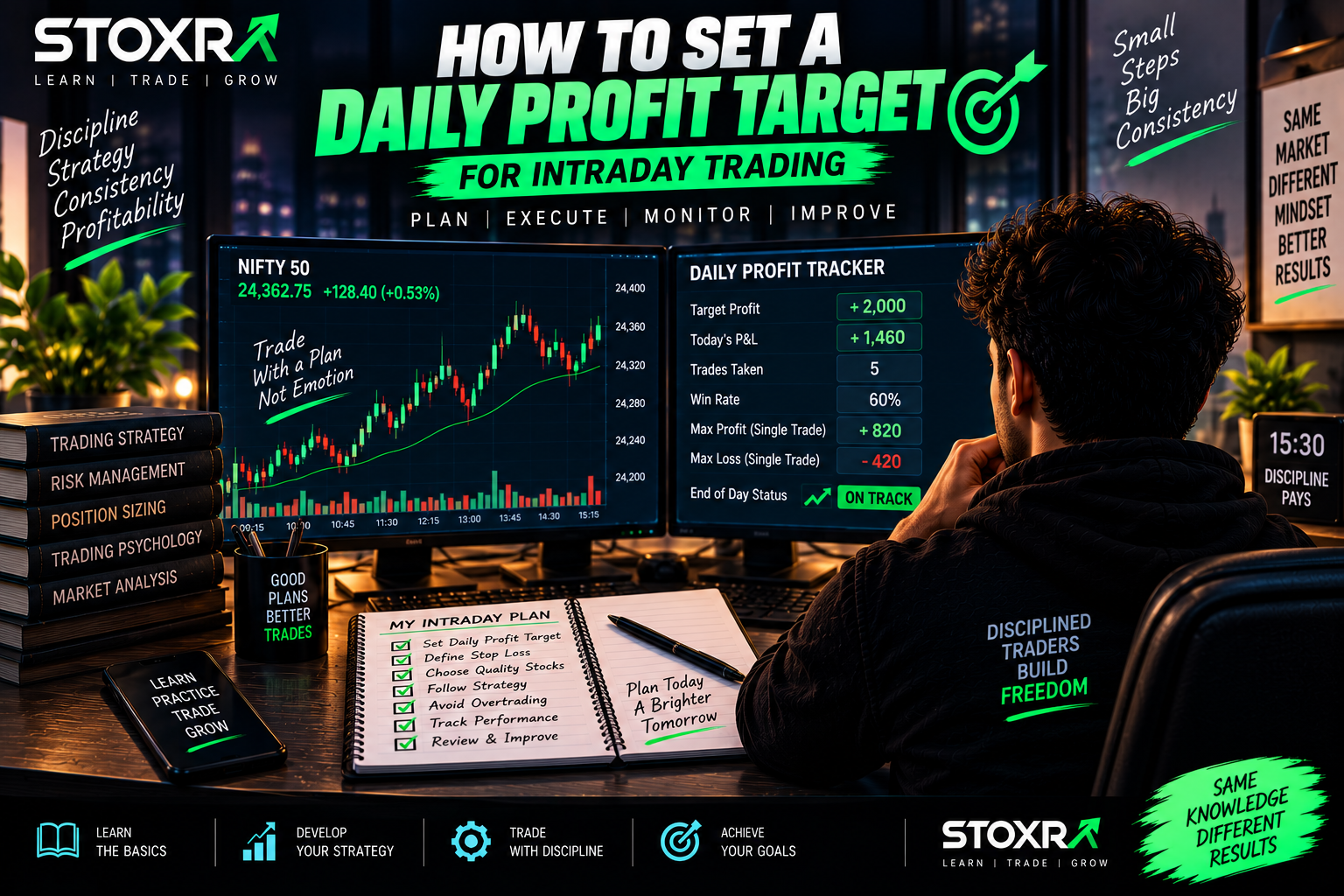
A balanced daily framework should contain both upside and downside boundaries. The profit target tells you when you may have done enough. The loss limit tells you when continuing could violate your risk plan.
For example, a trader could define a maximum loss for the session and separately define a satisfactory profit zone. The exact numbers should come from the individual's strategy and risk capacity rather than from a generic formula.
What Happens After You Hit the Profit Target?
There are several possible approaches. Some traders stop for the day. Others may continue only if a completely independent, high-quality setup appears and their plan explicitly allows it. The important thing is to decide the rule before the session begins.
Option 1: Stop Trading
This is the simplest approach. Once the predefined objective is reached, the trader closes the platform or moves into review mode. This can be particularly useful for traders who struggle with overtrading after a winning streak.
Option 2: Reduce Activity
A trader may choose to reduce size or become more selective after reaching the target, provided this is part of the predefined strategy. This is not an instruction to continue trading; it is a framework that some traders may test.
Option 3: Continue Only Under Strict Conditions
If a trading plan explicitly allows additional trades, those trades should still meet every setup condition. Reaching the target should never be used as permission to take lower-quality trades.
What Happens If You Do Not Hit the Target?
Nothing needs to be forced. A day without reaching the target can still be a successful trading day if the trader followed the plan, avoided unnecessary risk and protected capital.
Some market sessions are quiet. Others are highly volatile but do not match a particular strategy. The ability to stay inactive when there is no valid setup is itself a trading skill.
What If You Reach the Target Very Early?
Reaching the target early can create a new psychological challenge. A trader may become overconfident and believe the rest of the session offers “free money.” It does not. Every new trade still carries risk.
If the plan says to stop after the target, stop. If the plan permits additional opportunities, use the same risk rules and do not increase size merely because the account is already up for the day.
Do Not Increase Position Size to Reach the Target Faster
Increasing position size can make the target appear easier to reach, but it also increases the potential loss. This is especially dangerous when the larger size is not supported by the strategy's risk model.
- Do not double position size after a losing trade.
- Do not increase leverage because the target is still far away.
- Do not abandon stop-loss rules to improve the reward.
- Do not use previous profits as an excuse for excessive risk.
Daily Profit Target and Position Sizing
Position sizing should be calculated from acceptable risk, not from the daily profit target. If the target becomes the starting point for position size, the trader may unconsciously take excessive risk to reach it.
A more disciplined sequence is: setup → invalidation → risk per trade → position size → target → execution → review.
Market Conditions Can Change the Target's Relevance
The same strategy can behave differently in trending, range-bound, low-volume and highly volatile sessions. A rigid expectation that every session should produce the same result ignores market conditions.
A trader can therefore define a target framework while still allowing the strategy to say “no trade” when conditions are unsuitable.
Daily Profit Target for Beginners
Beginners should be especially careful about making daily income targets the centre of their trading plan. Early in the learning process, the priority should be developing good habits: following a setup, controlling risk, recording trades and understanding why trades work or fail.
A beginner can instead use process goals such as taking only planned trades, respecting the stop-loss, avoiding revenge trading and completing a trading journal. These behaviours can be measured even when the market does not provide a profitable opportunity.
Process Goals vs Profit Goals
| Profit Goal | Process Goal |
|---|---|
| Make a fixed amount today. | Take only valid setups. |
| Reach a fixed percentage. | Risk a predefined amount per trade. |
| Finish every day profitable. | Respect the daily loss limit. |
| Recover yesterday's loss. | Follow today's strategy independently. |
| Trade until the target is reached. | Stop when the plan says conditions are no longer suitable. |
How to Build a Daily Trading Routine
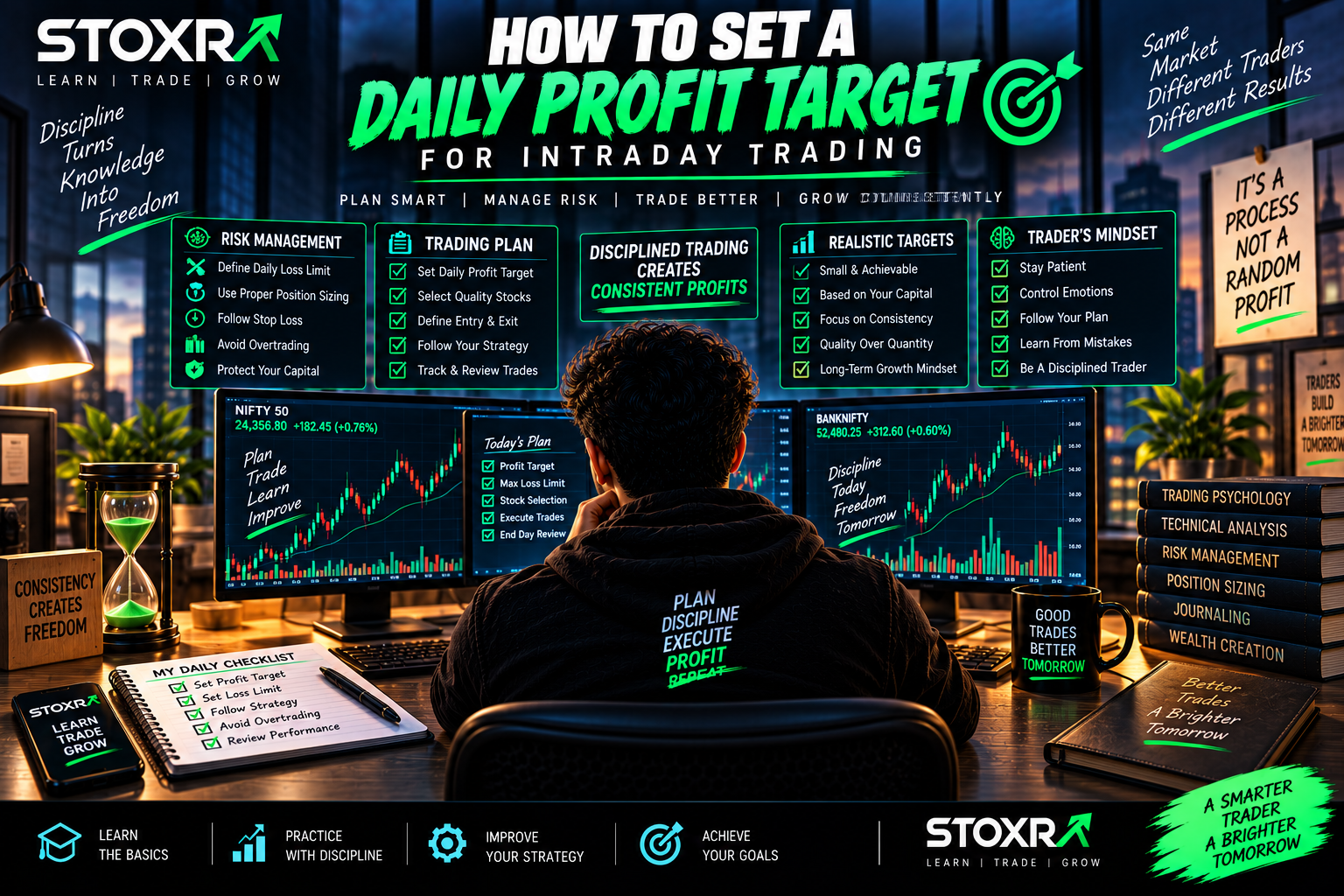
- Review the broader market before the session.
- Identify instruments that match your strategy.
- Define risk per trade.
- Set the daily maximum loss.
- Define a reasonable profit objective or stopping zone.
- Write down the maximum number of trades if applicable.
- Trade only predefined setups.
- Stop or reduce activity according to the rules.
- Record every trade.
- Review execution after the session.
Use a Daily Trading Checklist
Before Market Open
- What is the market environment?
- Which stocks or instruments are on the watchlist?
- What setups am I willing to trade?
- What is my maximum risk per trade?
- What is my daily loss limit?
- What conditions would make me stop trading?
During the Session
- Am I trading a valid setup?
- Is the position size within my risk plan?
- Has the setup become invalid?
- Am I trading because of a signal or because I want to reach the target?
- Am I becoming emotional after a win or loss?
Keep a Record of Daily Performance
A daily journal should record more than profit and loss. Write down the number of trades, setup type, average risk, mistakes, market condition and emotional state. Over time, this can show whether your target is helping or hurting your behaviour.
For example, if the data shows that most large losses occur after the trader has already reached the daily target, that is useful evidence. If most losses happen when the trader tries to recover after a losing streak, the daily loss rule may need greater attention.
Review the Target Regularly
A daily target should not be treated as permanent. As your strategy, capital, execution costs or trading behaviour changes, the framework may need to be reviewed.
However, changing the target after every good or bad day can also create inconsistency. Review it over a meaningful sample of trading sessions rather than reacting to a single result.
Three Common Daily Target Mistakes
Mistake 1: Chasing the Number
The trader keeps entering positions because the target has not been reached. This turns a planning tool into a pressure mechanism.
Mistake 2: Taking Excessive Risk
The trader increases size or leverage to reach the target faster. This can make one bad trade disproportionately damaging.
Mistake 3: Giving Back the Profit
The trader reaches the target and then continues trading without a valid reason. A later sequence of poor trades can erase the earlier gains.
Can a Daily Profit Target Improve Discipline?
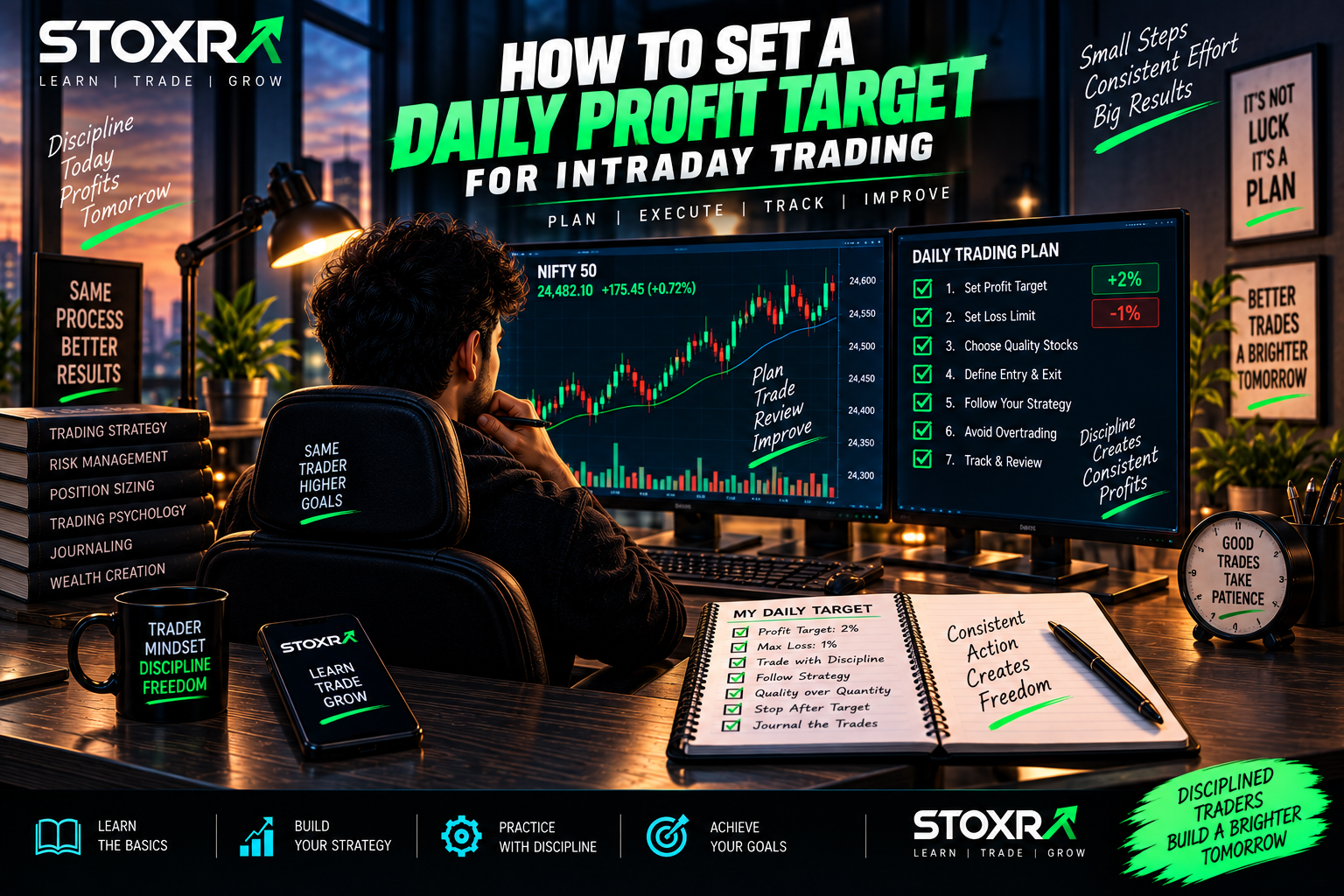
It can, if it is used as part of a broader system. A trader who knows when to stop may be less likely to turn a good session into an unnecessary series of trades. But the target only works when the trader is willing to respect it.
The strongest framework combines a profit objective with a loss limit, position-sizing rules, maximum trade rules and process-based goals.
Key Takeaway
A daily profit target should never be treated as a guaranteed daily income requirement. Use it as a discipline mechanism alongside a maximum loss limit and a clear trading process.
Your best trading day may sometimes be the day you made a profit and stopped according to plan. On another day, the best result may be finishing flat because no valid setup appeared. Protecting capital and maintaining discipline are part of long-term trading performance.
Frequently Asked Questions
Should every intraday trader have a daily profit target?
Not necessarily. Some traders prefer process-based goals and use strict risk limits without a fixed profit target. If a target is used, it should support the trading plan rather than force activity.
What is a good daily profit target for intraday trading?
There is no universal number. It should depend on the trader's strategy, capital, risk per trade, historical performance, trading costs and risk tolerance. A generic target may be inappropriate for another trader.
Should I stop trading after hitting my daily target?
If your predefined plan says to stop, then stopping can help protect the day's result. If your plan allows additional trades, those trades should still meet every strategy and risk requirement.
What if I do not reach my daily profit target?
Do not force a trade simply to reach it. A session can be successful from a process perspective even when the target is not achieved.
Is a daily loss limit more important than a profit target?
Both serve different purposes, but a loss limit is an important risk-control boundary. It can prevent a trader from continuing to increase exposure after the strategy is no longer working for that session.
Can I set a daily target as a percentage of capital?
A percentage can be used as a measurement framework, but it should not be assumed to be achievable every day. The target should be tested against the strategy's historical or simulated behaviour.
Should beginners focus on profit targets?
Beginners may benefit more from process goals such as following setups, controlling risk, avoiding revenge trading and maintaining a journal. Profit can then be evaluated as an outcome of the process.
Conclusion
Setting a daily profit target can help an intraday trader create structure, but it should never become a demand to make money every day. Markets are uncertain, and a strategy will naturally experience different results across different sessions.
A better approach is to connect the target with risk management. Define acceptable risk per trade, set a daily loss limit, identify quality setups, control the number of trades and decide in advance what happens after reaching the desired objective.
The ultimate goal is not to hit a number at any cost. It is to build a trading process that protects capital, reduces emotional decisions and allows good opportunities to be taken without forcing trades.
Explore More Intraday Trading Guides
Continue learning with STOXRA's practical trading education and build a more disciplined intraday trading process.
Disclaimer
This article is for educational and informational purposes only. It is not investment advice, a recommendation to buy or sell any security, or a guarantee of trading profits. Trading and investing in financial markets involves risk, including the possible loss of capital. Readers should conduct their own research and consider consulting a qualified financial professional before making financial decisions.