What Skills Does a Successful Trader Actually Need
What skills does a successful trader actually need? Learn the core abilities traders should develop, including market analysis, risk management, discipline, patience, decision-making, journaling and continuous learning.
What Skills Does a Successful Trader Actually Need?
Trading is not only about finding entries and exits. Developing a repeatable process requires analytical ability, risk management, discipline, patience, emotional control and the willingness to learn from both good and bad decisions.
Beginners often enter the stock market believing that trading success depends mainly on discovering the right indicator, strategy or entry signal. Those tools can be useful, but they represent only one part of the trading process.
A trader also needs to understand risk, follow rules, make decisions under uncertainty and review mistakes without allowing individual results to completely change the strategy.
So, what skills does a successful trader actually need? The answer includes both technical and behavioural abilities. Market analysis can help identify an opportunity, but discipline determines whether the trader follows the plan and risk management determines how much is exposed when the idea is wrong.
Beginners who want to build these foundations systematically can use STOXRA Learn for structured trading education while developing their own repeatable trading process.
Trading skill is a combination of analysis, execution and behaviour.
Knowing what might happen in the market is different from managing a trade properly when real decisions have to be made.
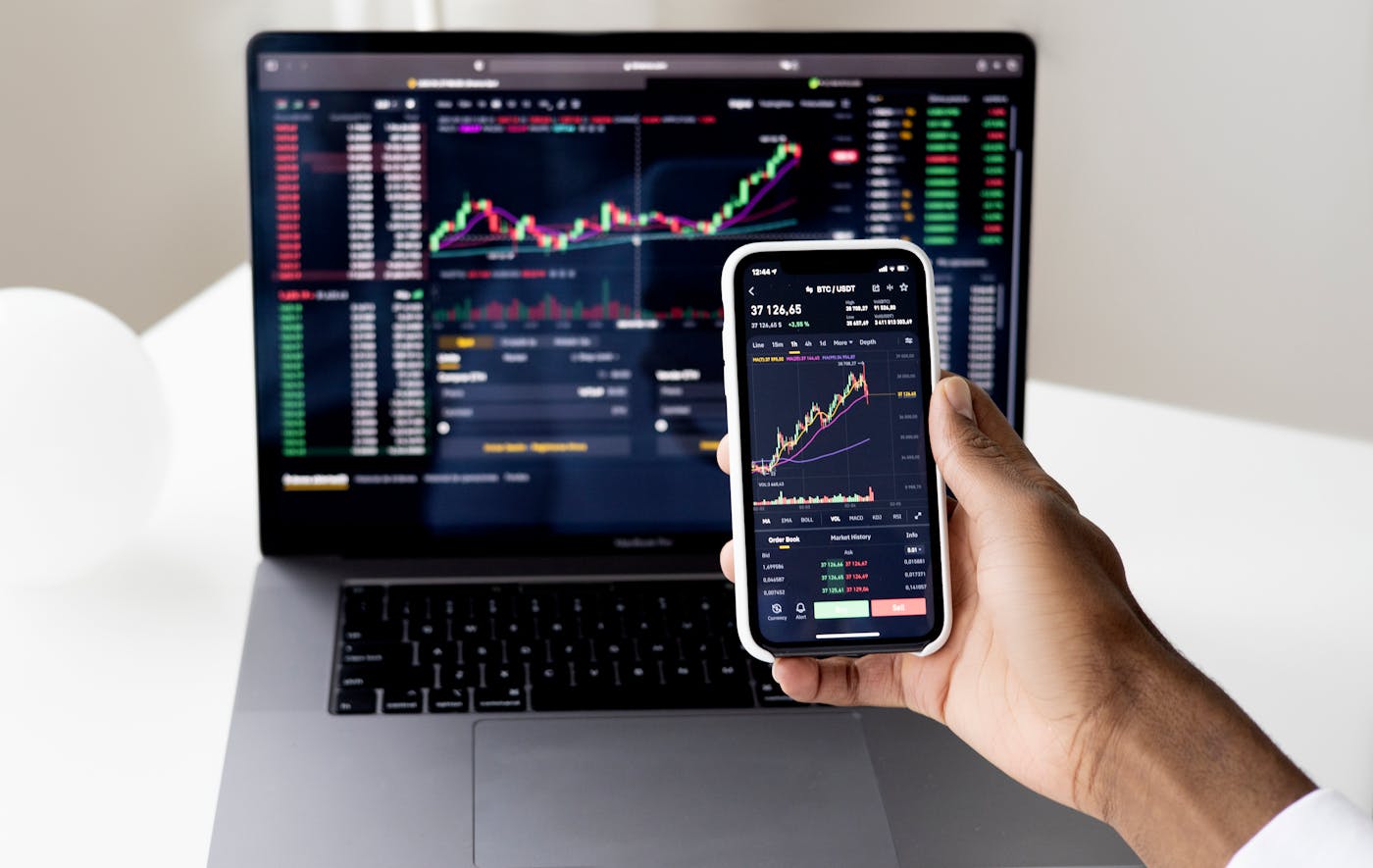
1. Market Analysis
The first important skill is the ability to analyse the market without turning every price movement into a trading opportunity.
Depending on the strategy, a trader may study price structure, trend, volume, volatility, support and resistance, technical indicators or fundamental information.
The objective is not to predict every movement correctly. Market analysis should help answer a more practical question: does the current situation match the conditions required by the trading strategy?
Separate Evidence From Assumption
A trader should be able to explain why a setup qualifies according to predefined rules rather than entering simply because the chart looks attractive.
2. Risk Management
A trading strategy can produce losing trades even when it is followed correctly. This makes risk management one of the most important skills a trader can develop.
Before entering a position, the trader should understand how much can be lost if the setup fails.
Risk management can include position sizing, stop-loss planning, exposure limits and rules for when trading should stop.
Know the Risk Before Entering the Trade
Entry price, invalidation level and position size should be considered before the order is placed rather than after the market moves against the position.
Beginners can strengthen this skill by studying how daily loss limits can support trading risk management .

3. Position Sizing
Position sizing connects a trading idea with risk management.
Two traders can take the same setup and experience very different outcomes if one uses a much larger position relative to the risk that can be tolerated.
Position size should therefore be based on a planned risk framework, not on excitement, confidence or the desire to recover a previous loss.
The exact calculation varies by instrument and trading method, but the principle remains the same: determine acceptable risk first and size the position accordingly.
Beginners can also review position sizing for beginner traders for a more focused explanation.
4. Trading Discipline
A strategy has limited value if the trader repeatedly ignores it.
Discipline means following predefined rules even when emotions encourage a different decision.
For example, a trader may know that a particular setup is invalid but still enter because the price is moving quickly and there is a fear of missing out.
Another trader may refuse to exit a losing position because accepting the loss feels uncomfortable.
✓ Trade only recognised setups.
✓ Follow predefined entry conditions.
✓ Respect invalidation levels.
✓ Keep position size within the risk plan.
✓ Stop when predefined trading limits are reached.
If following rules is difficult, review how to follow a trading plan without breaking its rules .
5. Patience
Trading involves a large amount of waiting.
A trader may identify an interesting stock but still need to wait for the required setup. On some days, no suitable opportunity may appear at all.
Impatience can cause traders to lower their standards simply because they want market action.
No trade can be a valid trading decision.
If market conditions do not satisfy your strategy, waiting can be more disciplined than forcing an entry.

6. Emotional Control
Trading decisions are made under uncertainty, which can create strong emotional reactions.
Fear can cause an early exit. Greed can encourage a trader to take excessive risk. Frustration after a loss can lead to another trade that was never part of the original plan.
Emotional control does not mean eliminating emotion completely. It means recognising the emotion without automatically allowing it to control the next decision.
Can encourage premature exits or hesitation.
Can encourage excessive size or unrealistic expectations.
Can lead to revenge trading after a loss.
Can cause traders to increase risk after a winning streak.
7. Decision-Making Under Uncertainty
Markets do not provide certainty before a trade.
A trader usually works with probabilities, incomplete information and conditions that can change quickly.
Good decision-making therefore means evaluating available evidence and following a process without demanding certainty from the market.
A good decision can still produce a losing trade.
Judge the quality of the decision by whether the process and risk rules were followed, not only by whether one trade made money.
8. The Ability to Follow a Trading Plan
A trading plan converts broad ideas into specific rules.
It can define the markets that may be traded, acceptable setups, entry conditions, exit rules, risk limits and situations where trading should be avoided.
Having these rules written before the trade reduces the number of decisions that must be improvised under pressure.
What am I allowed to trade?
What does my setup look like?
What confirms an entry?
Where is the trade invalid?
How much can I risk?
What triggers an exit?
When should I stop trading?

9. Trading Journal and Self-Review
Experience alone does not guarantee improvement. Traders also need to review what their experience is teaching them.
A trading journal creates a record of decisions that can be studied later.
Trading setup
Reason for entry
Planned risk
Entry and exit
Whether rules were followed
Emotional state
Result
Lesson learned
A journal becomes particularly useful when traders review patterns across multiple decisions instead of judging themselves from a single win or loss.
For a practical framework, see how to build a trading journal .
10. Avoiding Overtrading
Being active is not the same as being productive.
A trader who constantly searches for another position may begin taking lower-quality setups simply to remain involved in the market.
Overtrading can also occur after a loss when the trader wants to recover money quickly.
Your trading activity may be becoming excessive if you:
Enter trades that do not match your setup.
Immediately search for another trade after a loss.
Increase position size to recover losses.
Trade because you are bored.
Keep trading after reaching your daily limit.
Traders struggling with this behaviour can review practical ways to avoid overtrading .
11. Adaptability Without Constantly Changing Strategy
Markets change. A strategy that works well in one environment may behave differently when volatility, liquidity or broader market conditions change.
Traders therefore need adaptability, but adaptability should not be confused with changing the strategy after every losing trade.
A useful approach is to collect enough evidence, review results and make deliberate adjustments rather than reacting emotionally to short-term outcomes.
Adapt from evidence, not frustration.
A single loss does not automatically prove that a strategy needs to be changed.
12. Continuous Learning
Trading requires ongoing learning because markets, tools and the trader's own behaviour can evolve.
However, continuous learning should not mean consuming endless trading content without practising anything.
A better approach is to study one concept, understand how it relates to the strategy, practise it and review the results.
Traders looking for structured educational material can continue developing these foundations through STOXRA's trading education resources .
Learn → Practise → Record → Review → Improve
Turning information into a repeatable process is more useful than collecting strategies without testing or reviewing them.

13. Practising Trading Skills Without Immediately Risking Capital
Understanding these skills intellectually is different from applying them while making trading decisions.
Beginners can use paper trading to practise following entry rules, respecting exits, controlling position size and recording decisions before taking on real financial risk.
Paper trading cannot fully reproduce the emotional pressure or execution conditions of live trading, but it can provide a useful environment for practising a process.
Beginners can explore how paper trading can support beginner learning .
✓ Wait for the predefined setup.
✓ Calculate risk before entry.
✓ Use the planned position size.
✓ Follow the exit rule.
✓ Record every decision.
✓ Review the process afterwards.
14. How Beginners Can Build These Trading Skills Step by Step
Trying to master every aspect of trading at once can make the learning process unnecessarily confusing.
Learn Market Basics
Understand orders, charts, market structure and basic risk concepts.
Choose One Trading Approach
Focus on understanding one strategy before continuously searching for new ones.
Write Clear Rules
Define the setup, entry, invalidation, risk and exit process.
Practise the Process
Use historical review or paper trading to practise execution.
Keep a Journal
Record whether decisions followed the intended rules.
Review Regularly
Identify repeated mistakes and areas that require further study.
Use Trading Technology to Support Your Skills
Technology can support analysis and learning, but tools cannot replace discipline, risk management or decision-making.
STOXRA's supplied platform material includes Advanced Charts, AI Mentor, Paper Trading, Option Chain Analysis, Trading Academy, Market News, Trading Competitions and Portfolio Analytics.
Traders can explore the STOXRA AI trading platform to understand how modern trading and analysis tools can fit into a structured workflow.
Combine Education, Practice and Market Analysis
Use technology as a supporting tool while continuing to develop independent analysis, risk control and disciplined execution.
Explore AI Trading Platform →Frequently Asked Questions About Trading Skills
What skills does a successful trader actually need?Important trading skills include market analysis, risk management, position sizing, discipline, patience, emotional control, decision-making, journaling and continuous learning.
Is technical analysis enough to become a good trader?Technical analysis can support decision-making, but traders also need risk management, execution discipline and the ability to follow a consistent process.
What is the most important skill in trading?There is no single skill that guarantees success. Analysis, risk control and discipline work together, and weakness in one area can affect the entire process.
Why is risk management important for traders?Because every strategy can experience losing trades. Risk management helps control how much capital is exposed when a trade does not work as expected.
Can trading discipline be learned?Discipline can be developed by creating clear rules, practising them consistently, keeping a journal and reviewing situations where the rules were broken.
Does paper trading help build trading skills?Paper trading can help beginners practise strategy execution, position management and journaling without immediately risking real capital.
Why should traders keep a journal?A journal provides a record of decisions and helps identify repeated strengths, mistakes and behavioural patterns.
Do good trading skills guarantee profit?No. Trading involves uncertainty and financial risk. Skills can improve the quality and consistency of the decision-making process, but they cannot guarantee profitable results.
Successful Trading Requires More Than Finding a Good Setup
When asking what skills does a successful trader actually need, it is important to look beyond chart patterns and indicators.
Market analysis helps identify opportunities. Risk management controls exposure. Position sizing connects the trade with the risk plan. Discipline and patience help the trader wait for appropriate conditions.
Emotional control helps prevent fear, greed or frustration from replacing the strategy. Journaling creates feedback, while continuous learning allows the process to improve over time.
None of these skills eliminates market uncertainty. Their purpose is to help create a more structured and repeatable approach to decision-making.
Beginners should therefore focus less on finding a perfect strategy and more on gradually building the complete set of skills required to analyse, execute, manage and review trading decisions.
Build Your Trading Skills Through Structured Learning
Strengthen market knowledge first, then practise applying the concepts through a consistent trading process.
Explore STOXRA Learn →Financial Disclaimer: Trading and investing in securities involves risk. This content is for educational purposes only and is not investment advice. Trading strategies, technical tools, paper trading and risk-management methods cannot guarantee profitable results. Past performance is not indicative of future results.