
The idea
Think in systems, not guesses. Every trade concept becomes easier to study when the conditions are explicit.
STOXRA / ALGORITHMIC TRADING
STOXRA Algo is STOXRA’s dedicated algorithmic-trading learning and strategy-evaluation experience. It is designed to help users think in a more structured way about market decisions: define rules, examine evidence, simulate decisions and keep risk in view before automation.
Educational overview only. Confirm current product features inside your STOXRA account. Nothing on this page is investment advice or a promise of results.
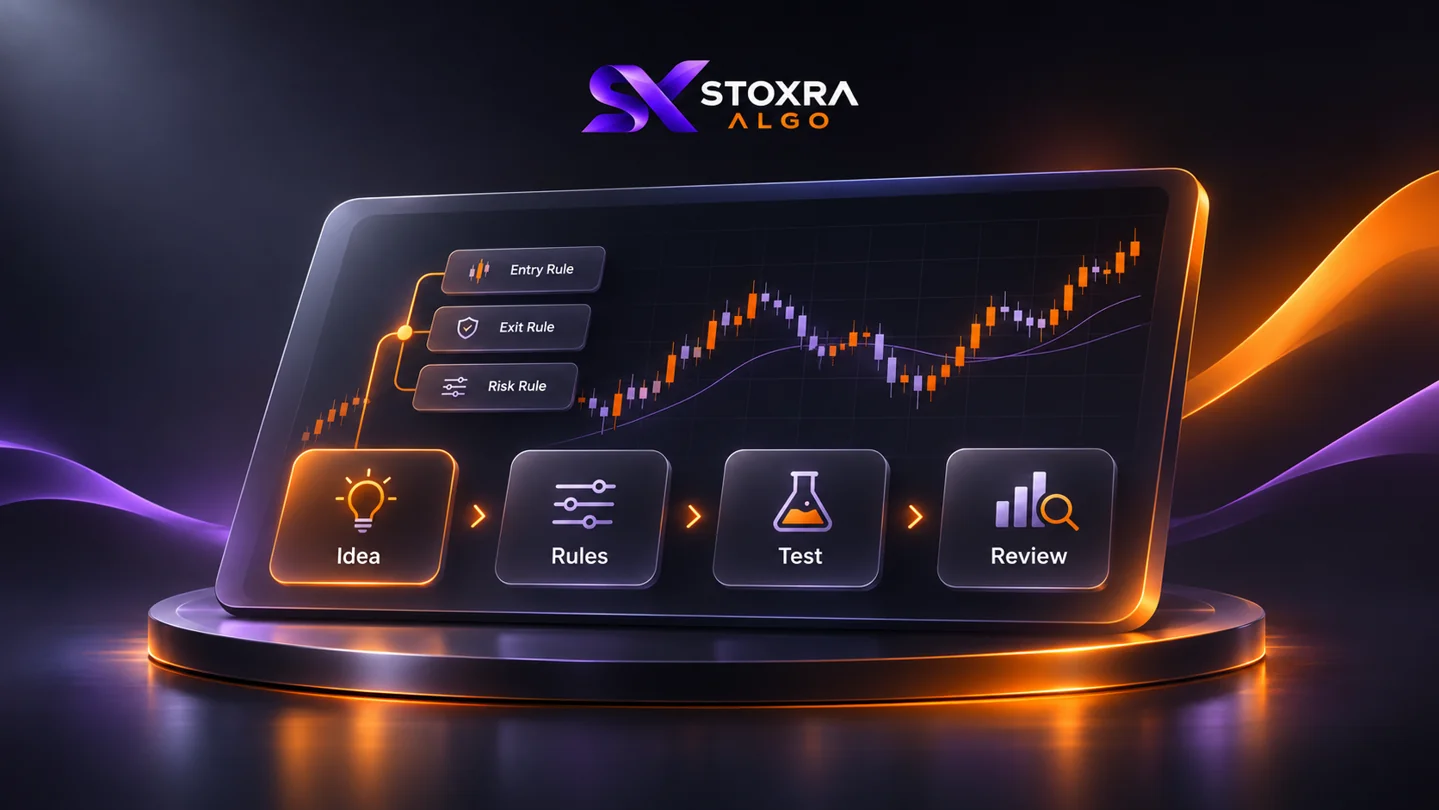
Think in systems, not guesses. Every trade concept becomes easier to study when the conditions are explicit.
Define, challenge, simulate and review. Research is a process of testing assumptions, not chasing certainty.
Risk rules matter as much as trade rules. Every process needs limits, monitoring and a stop condition.
THE STOXRA ALGO WORKFLOW
Below is a full educational journey—from forming a strategy idea to evaluating risk. The illustrations are conceptual and are meant to explain the process clearly.
STEP 1 / STRATEGY BUILDING
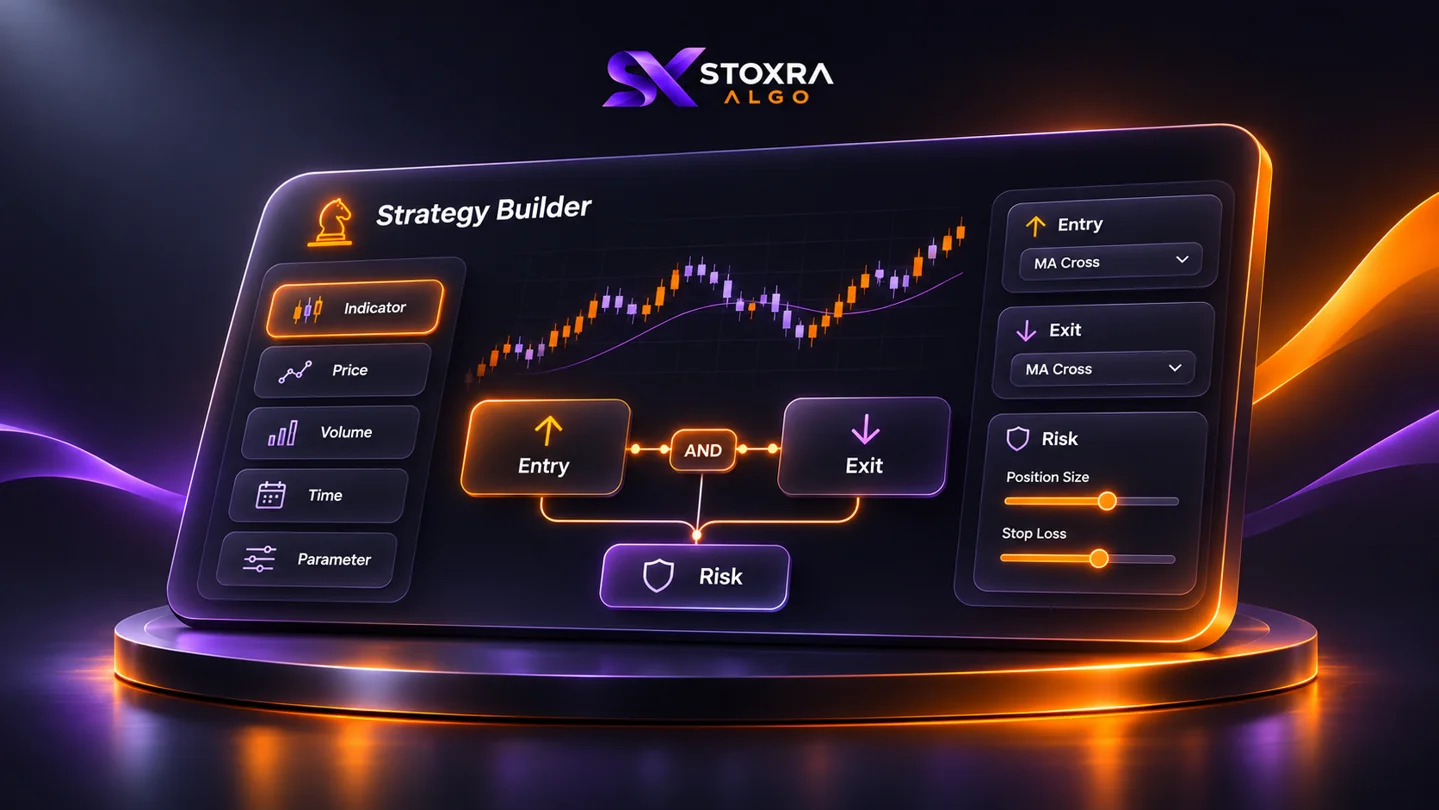
A trading idea becomes testable only when it is translated into conditions: what is being traded, under what setup, on which timeframe, with what entry trigger, which exit logic and under which circumstances no trade should happen at all.
Good strategy design also includes position assumptions, invalidation logic and a record of why the rule exists. This makes future review more honest and more useful.
STEP 2 / BACKTESTING
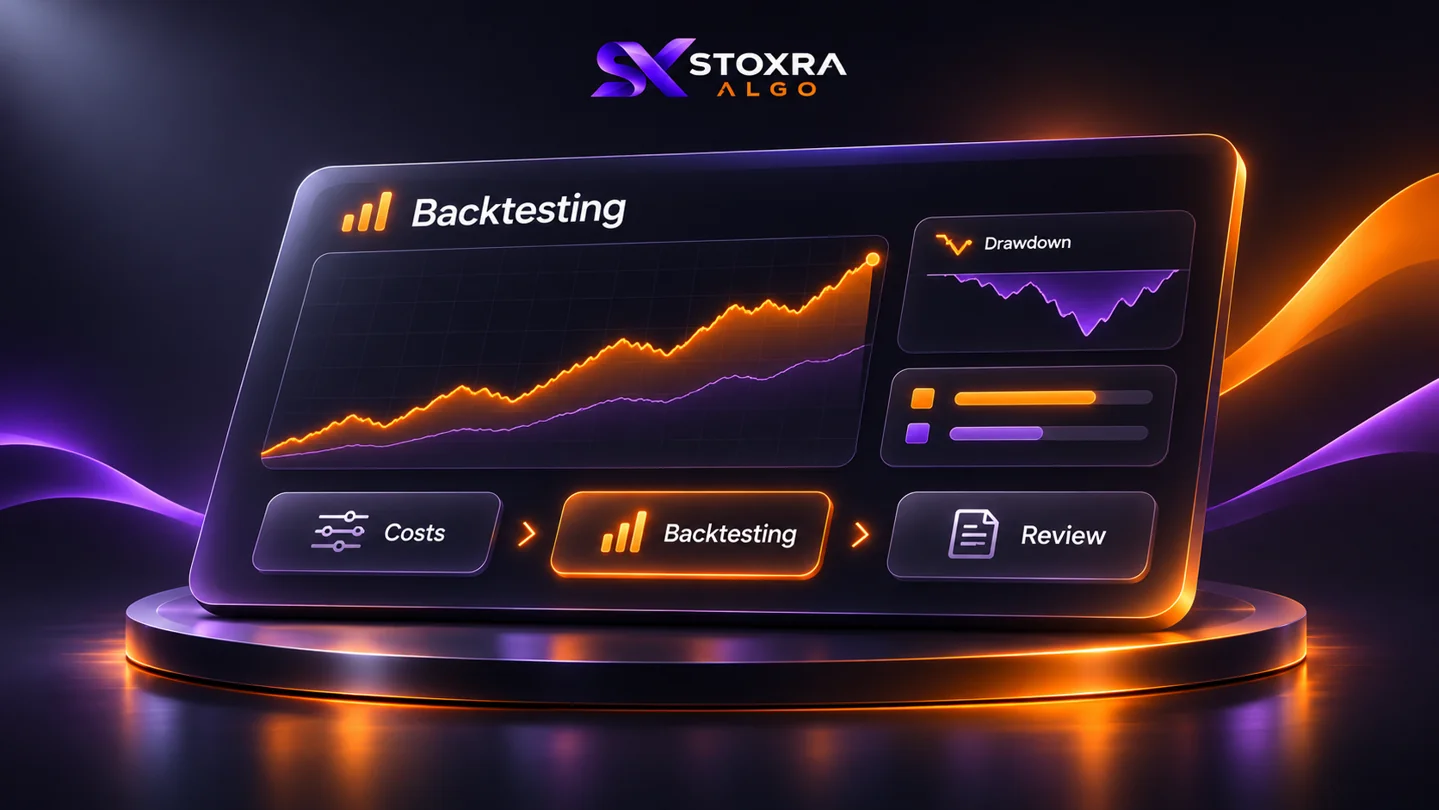
Backtesting is a historical research tool. It helps examine how a clearly defined set of rules would have behaved on past data, but it does not guarantee future performance. Costs, slippage, missing data and overfitting can all distort a result.
That is why a thoughtful review looks beyond headline returns and examines the quality of evidence: drawdowns, trade counts, parameter sensitivity and realism of assumptions.
STEP 3 / PAPER TRADING
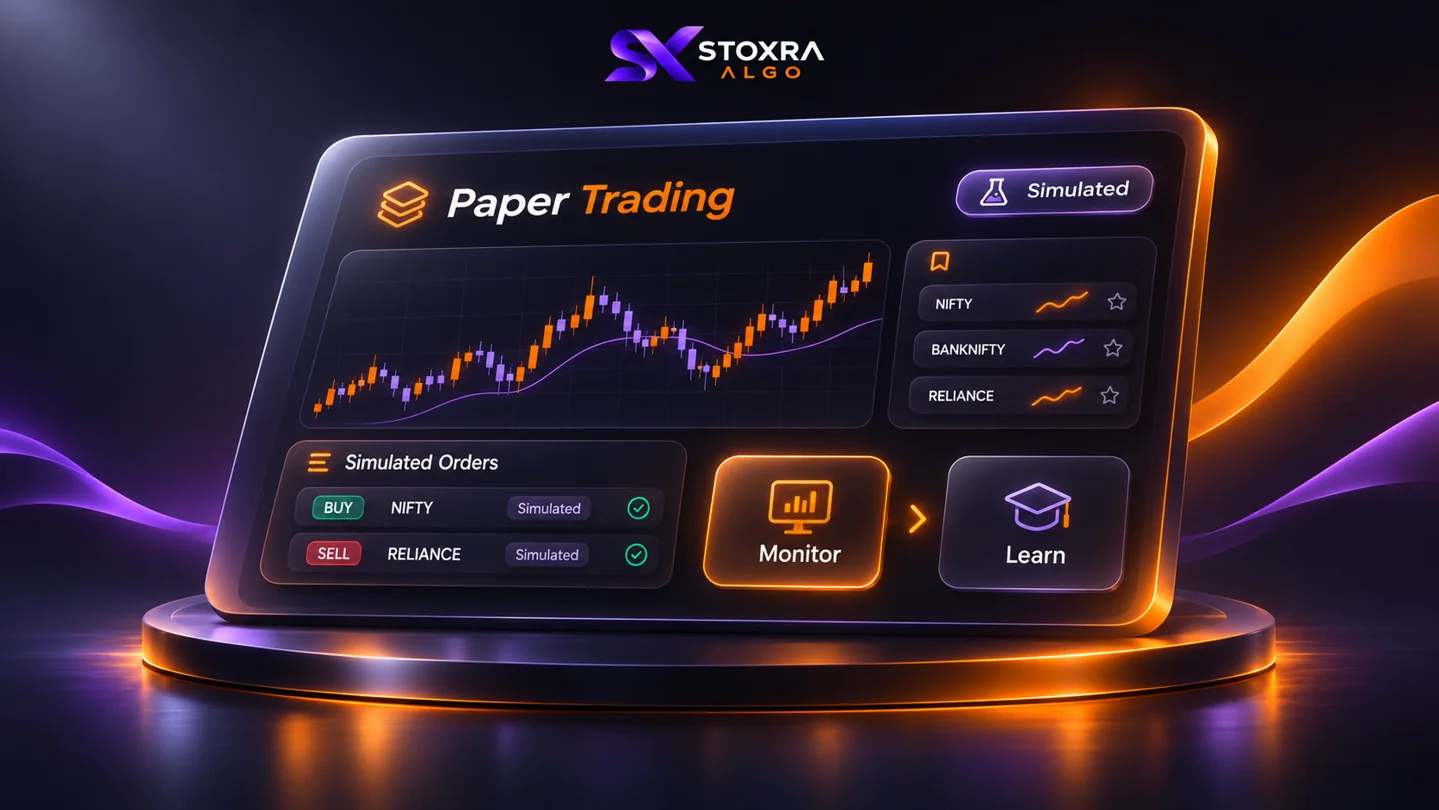
Paper trading allows a strategy idea to be followed in a simulated setting without deploying real capital. It can help show whether a process is understandable, whether decisions are being followed consistently and whether the workflow is practical over time.
Simulation, however, is not the same as execution. Real markets involve latency, liquidity differences, slippage and emotional pressure that can change outcomes significantly.
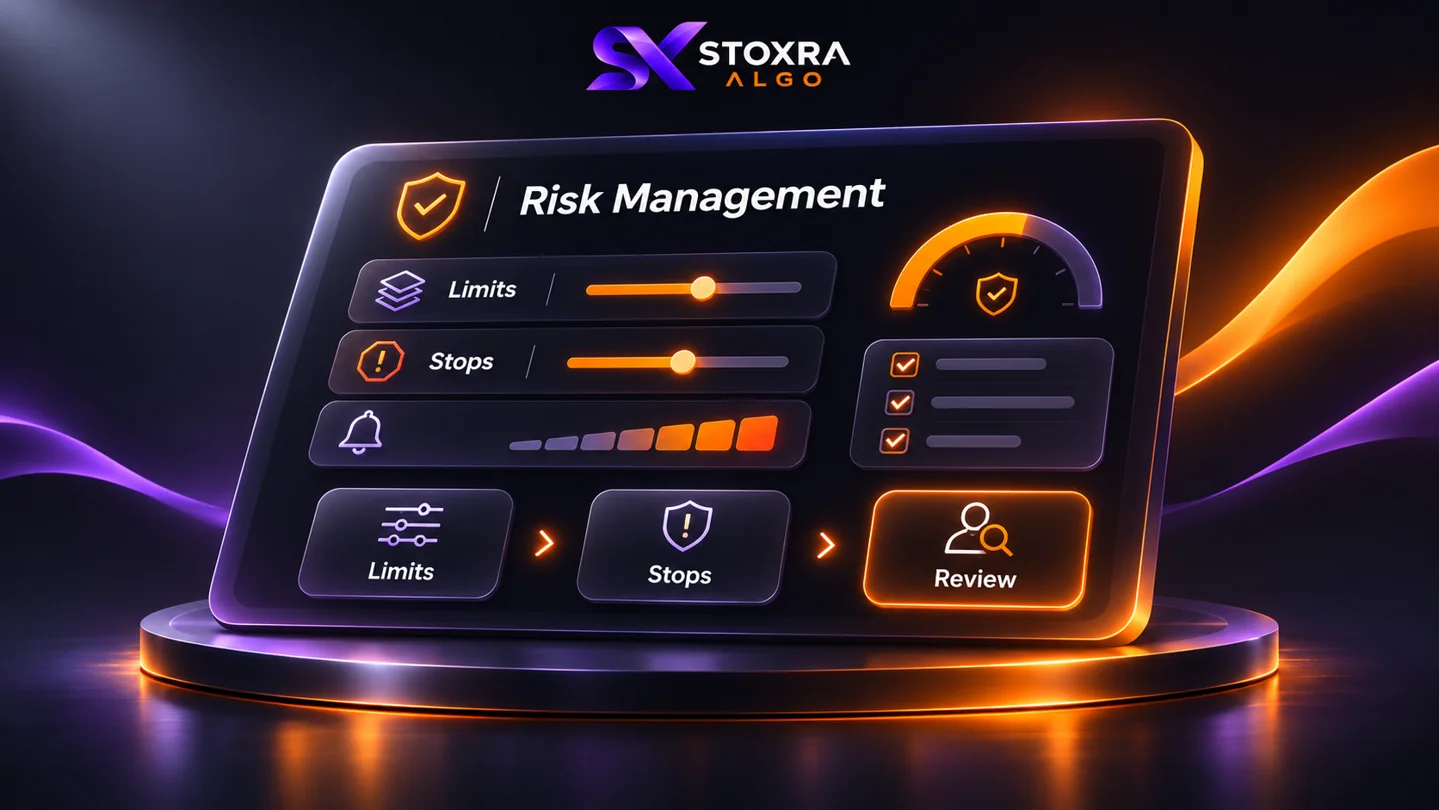
STEP 4 / RISK MANAGEMENT
Risk management is not an optional layer placed after strategy design; it is part of the strategy itself. Position limits, invalid data checks, maximum exposure thresholds and conditions that pause or stop the process altogether are essential parts of responsible decision-making.
No automation framework can remove market risk or technical risk. A premium trading workflow is defined as much by what it refuses to do as by what it allows.
WHY THIS PAGE EXISTS
This page is meant to introduce the logic behind STOXRA Algo in a clean and structured way. Instead of overpromising, it explains how users can think more clearly about strategy logic, evidence and control.
FAQS
STOXRA Algo is STOXRA’s algorithmic-trading experience built around structured decision-making. It helps users think through strategy rules, historical testing, simulation and risk controls in a more systematic way.
No. The page is educational. It explains a process for researching and evaluating strategies, but it does not promise investment returns or guaranteed accuracy.
No. Backtesting is one step in research. It should be interpreted carefully and reviewed alongside costs, assumptions, risk and simulation behaviour.
Paper trading helps users observe how a defined strategy behaves in a simulated environment. It can be useful for learning discipline, review habits and process clarity, though it is not the same as live execution.
Because a rule-based process is incomplete without limits. Risk management defines how much exposure is acceptable, when to stop and how to respond when assumptions break down.
NEXT STEP
Start from fundamentals, keep the focus on rules and evidence, and remember that disciplined research matters more than dramatic claims.