7 Risk Management Techniques to Reduce Drawdown
Learn practical risk management techniques traders can use to control drawdown, protect trading capital and build a more disciplined approach to managing market risk.
7 Risk Management Techniques to Reduce Drawdown
Drawdown is one of the most important risks traders need to understand. A trading strategy can generate profitable trades over time, but large periods of losses can significantly reduce trading capital and make it harder to recover.
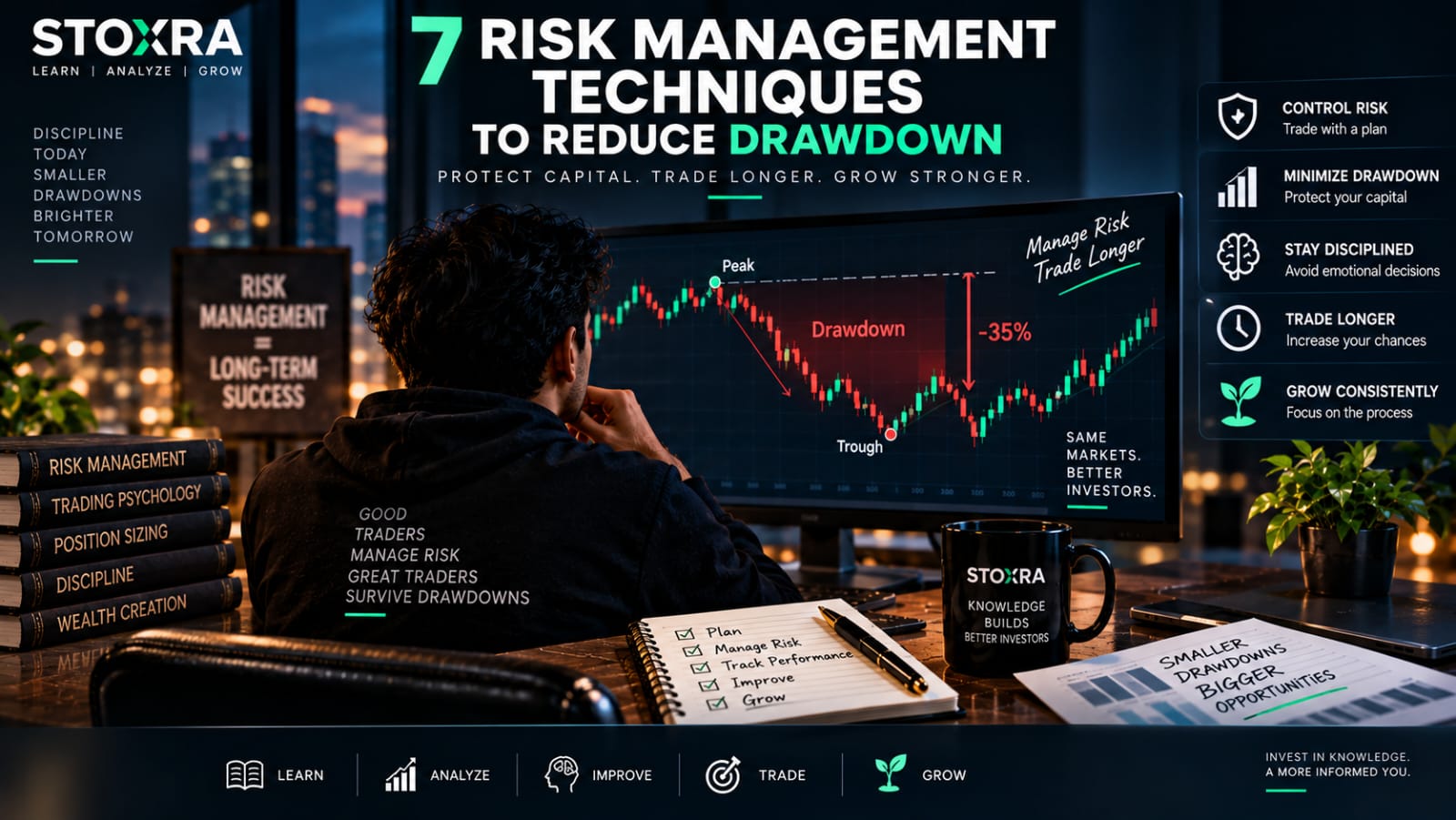
Drawdown refers to the decline in the value of a trading account from a previous peak to a subsequent low before the account recovers to a new high.
Managing drawdown is therefore not simply about avoiding every losing trade. Losses are a normal part of trading. The objective is to keep losses controlled so that a series of unsuccessful trades does not cause severe damage to trading capital.
This article explains seven practical risk management techniques that traders can use to reduce drawdown and build a more disciplined trading process.
What Is Trading Drawdown?
Drawdown measures how much a trading account has declined from a previous peak.
For example, if a trading account grows from ₹1,00,000 to ₹1,20,000 and later falls to ₹1,08,000, the drawdown from the peak is ₹12,000.
In percentage terms, the drawdown is calculated relative to the previous peak account value.
Why Drawdown Matters
Large drawdowns can have a disproportionate effect on the capital needed to recover losses.
- A 10% loss requires approximately 11.1% growth to recover.
- A 20% loss requires 25% growth to recover.
- A 30% loss requires approximately 42.9% growth to recover.
- A 50% loss requires 100% growth to recover.
This illustrates why controlling downside risk is an important part of long-term trading.
What Causes Large Trading Drawdowns?
Drawdown can occur for many reasons. Sometimes it is caused by normal losing streaks, while in other cases it results from poor risk management or a trading strategy that no longer matches market conditions.
- Oversized trading positions
- Excessive leverage
- Ignoring stop-loss levels
- Taking too many trades
- Concentrating capital in one position or market
- Revenge trading after losses
- Trading without a defined risk limit
- Changing strategies emotionally
- Using a strategy outside its suitable market conditions
7 Risk Management Techniques to Reduce Drawdown
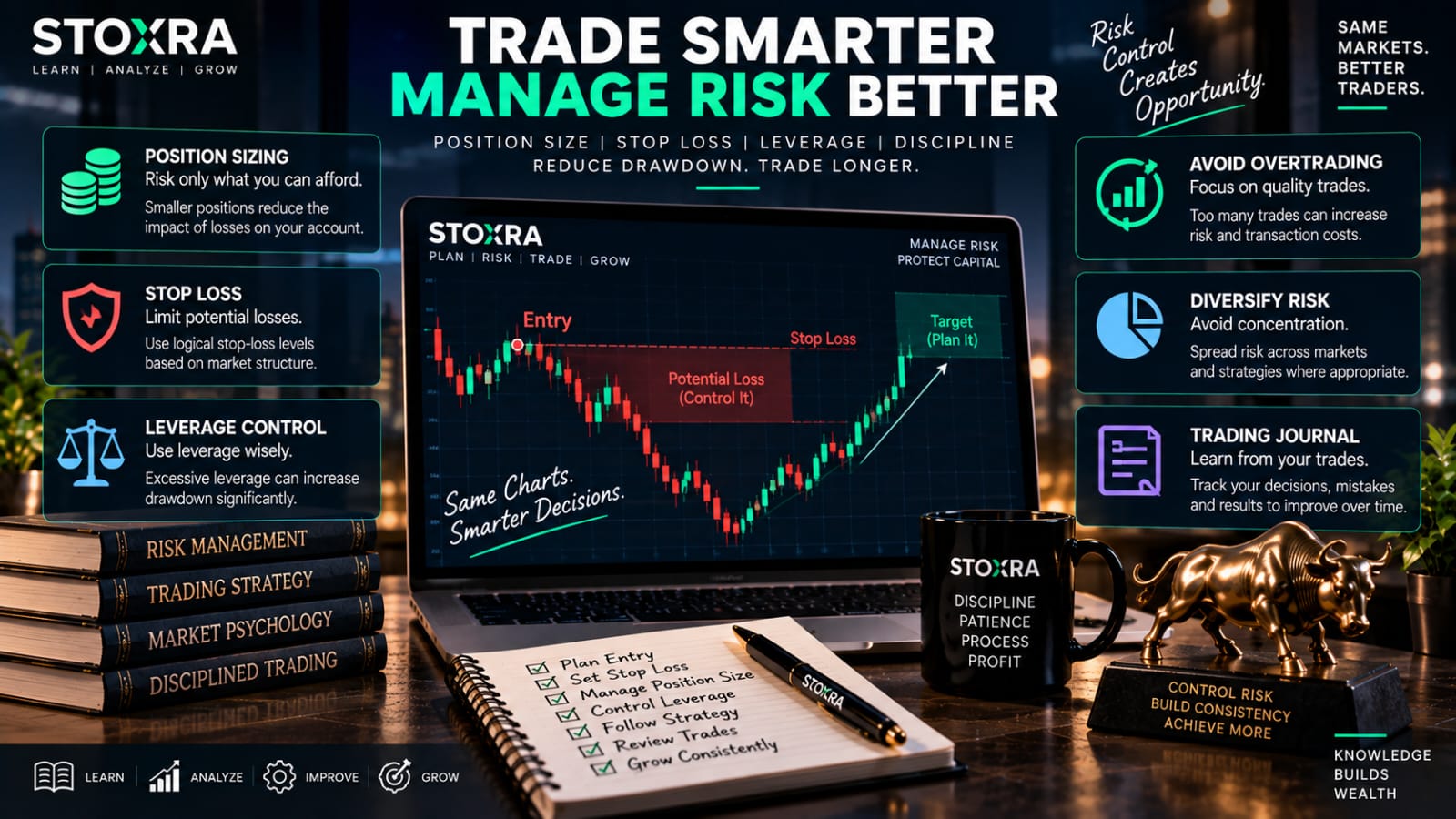
1. Use Proper Position Sizing
Position sizing is one of the most effective ways to control drawdown.
Instead of deciding the position size based only on how much capital is available, traders should consider how much they are willing to lose if the trade moves against them.
Smaller position sizes can reduce the impact of individual losing trades on the overall account.
Position sizing should also reflect the volatility of the instrument. Highly volatile markets may require smaller positions than relatively stable markets.
2. Define Risk Before Entering a Trade
A trader should know the maximum acceptable loss before entering a position.
This helps prevent emotional decisions after the trade has already moved against the trader.
A predefined risk level can also make it easier to determine the appropriate position size and stop-loss placement.
The key principle is simple: define the risk before focusing on the potential reward.
3. Use Stop-Loss Levels Carefully
A stop-loss can help limit losses when a trade moves in the opposite direction of the original thesis.
However, a stop-loss should not be placed randomly. It should reflect the market structure, volatility and reasoning behind the trade.
Extremely tight stops can result in frequent premature exits, while stops that are too wide can expose the account to unnecessarily large losses.
Traders should therefore consider both the technical setup and the amount of capital they are willing to risk.
Important Risk Reminder
A stop-loss does not guarantee that an order will always be executed at the exact selected price. Market conditions, liquidity and price gaps can affect execution.
4. Control Leverage
Leverage can increase both potential gains and potential losses.
Excessive leverage is one of the major contributors to large drawdowns because relatively small market movements can have a large effect on account equity.
Traders should use leverage cautiously and understand the margin requirements and potential losses associated with leveraged instruments.
The objective should be to use leverage as a tool rather than allowing leverage to determine the level of risk in the trading account.
5. Avoid Overtrading
Taking too many trades can increase transaction costs and expose a trader to unnecessary market risk.
Overtrading can also happen after a losing trade when a trader attempts to recover the loss quickly.
A better approach is to define specific conditions under which a trade will be considered valid.
If there is no suitable setup, staying out of the market can be a valid trading decision.
6. Diversify Risk Where Appropriate
Concentrating too much capital in a single market, sector or trading idea can increase drawdown risk.
Diversification can help reduce the impact of a single adverse event, although diversification does not eliminate risk.
Traders should also remember that positions that appear different can sometimes become highly correlated during periods of market stress.
Therefore, diversification should be based on actual risk exposure rather than simply counting the number of positions.
7. Maintain a Trading Journal
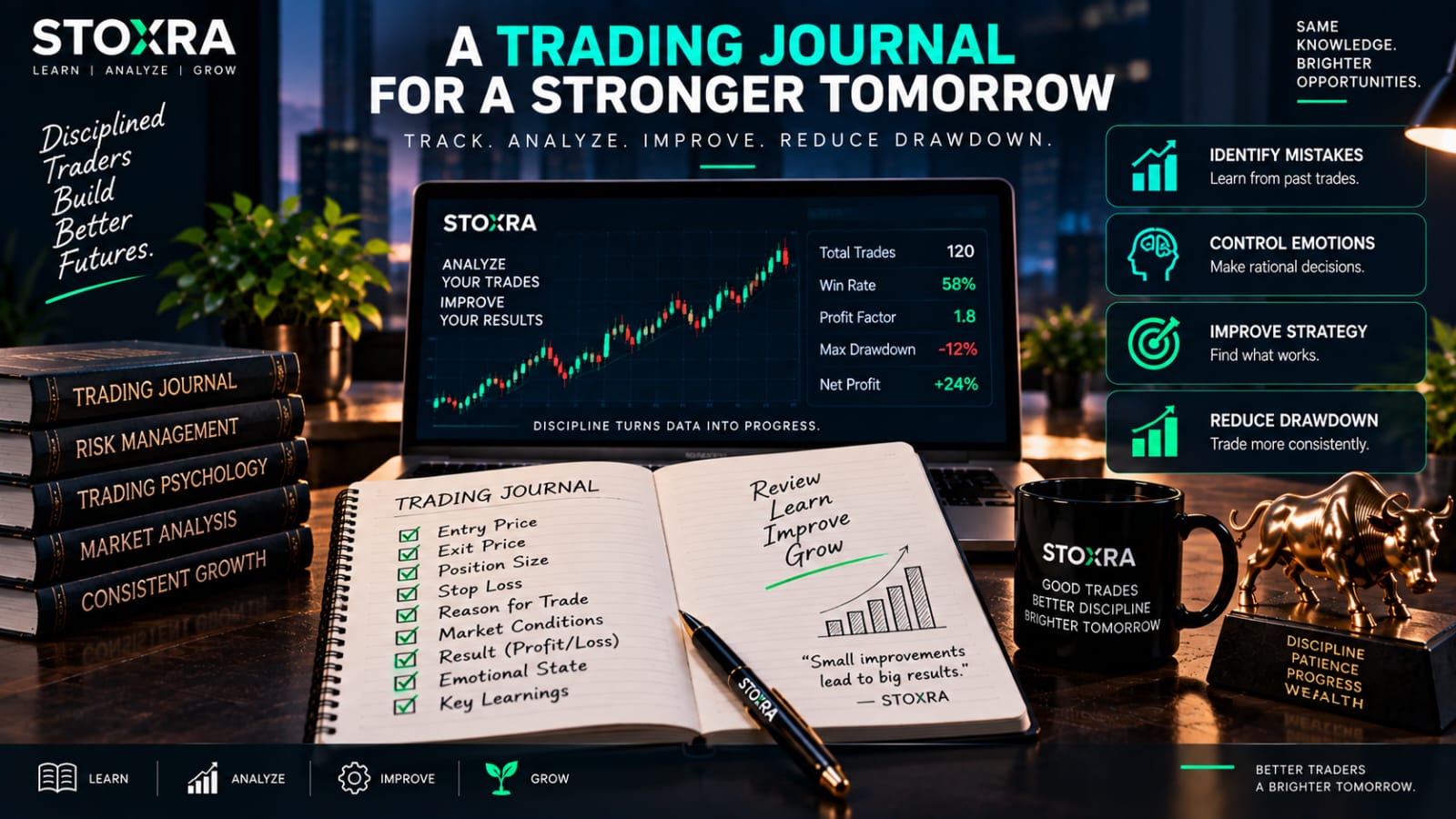
A trading journal can help traders identify patterns in their decision making.
Useful information to record can include:
- Entry price
- Exit price
- Position size
- Stop-loss level
- Reason for entering the trade
- Market conditions
- Result of the trade
- Emotional state during the trade
Reviewing this information can help identify repeated mistakes and improve the trading process over time.
How to Calculate Maximum Drawdown
Maximum drawdown measures the largest decline from a portfolio or trading account peak to a subsequent low during a specific period.
A simplified percentage calculation is:
Maximum Drawdown (%) = (Peak Value − Trough Value) ÷ Peak Value × 100
For example, if an account reaches ₹2,00,000 and later falls to ₹1,60,000 before recovering, the drawdown is ₹40,000, or 20% from the peak.
Monitoring drawdown can help traders understand whether their current strategy and risk level are consistent with their overall objectives.
Drawdown and Risk-Reward Ratio
Risk-reward ratio is another important part of trading risk management.
A strategy that risks a large amount of capital for a relatively small potential reward may require a very high win rate to remain profitable.
Traders should therefore consider potential reward alongside the amount being risked.
However, a high risk-reward ratio alone does not guarantee profitability. Win rate, trade frequency, execution quality and market conditions also matter.
How Trading Psychology Affects Drawdown
Risk management is not only about formulas and position sizes. Psychology can have a significant effect on how traders respond to losses.
After a losing streak, some traders may increase their position size in an attempt to recover losses quickly. This can make an existing drawdown significantly worse.
Fear can produce premature exits, while greed can encourage traders to take excessive risk.
Maintaining a predefined process can help reduce the influence of these emotional reactions.
Read more about how FOMO leads to trading mistakes .

What to Do During a Drawdown
A drawdown can be psychologically difficult, particularly when several losing trades occur close together.
Instead of immediately increasing risk to recover losses, traders can review their process and determine whether the losses are within the strategy's expected range.
- Review recent trades.
- Check whether trading rules were followed.
- Examine whether market conditions have changed.
- Review position sizing and leverage.
- Identify repeated emotional decisions.
- Consider reducing risk if the drawdown becomes larger than the predefined tolerance.
When Should a Trader Reduce Risk?
There is no single drawdown percentage that is appropriate for every trader or strategy.
A trader should establish risk limits before trading and determine what level of drawdown would trigger a review or reduction in exposure.
If a drawdown becomes significantly larger than expected, it may indicate that the strategy, market environment or execution process needs to be reassessed.
Common Drawdown Management Mistakes
- Increasing position size after losses.
- Removing or widening stop-loss levels emotionally.
- Using excessive leverage to recover losses.
- Trading continuously without reviewing performance.
- Blaming the market instead of analysing the trading process.
- Changing strategies after a small number of losing trades.
- Ignoring transaction costs.
- Taking trades outside the original trading plan.
Building a Drawdown Control Plan
A practical drawdown control plan can include several predefined rules.
Before Trading
- Define the maximum acceptable risk.
- Determine appropriate position size.
- Identify the trade setup.
- Define the invalidation or exit level.
- Understand leverage and margin requirements.
During Trading
- Follow the predefined risk limits.
- Avoid impulsive position increases.
- Monitor market conditions.
- Avoid revenge trading.
- Record important trade decisions.
After Trading
- Review the trade.
- Record the result.
- Analyse mistakes.
- Track cumulative drawdown.
- Determine whether the strategy is behaving as expected.

Key Takeaway
Controlling drawdown is an essential part of protecting trading capital.
Traders can reduce unnecessary drawdown by using appropriate position sizing, defining risk before entering trades, using suitable stop-loss levels, controlling leverage, avoiding overtrading, diversifying risk where appropriate and maintaining a detailed trading journal.
Losses cannot always be avoided, but disciplined risk management can help prevent individual losses or losing streaks from becoming disproportionately damaging to the trading account.
The objective is not to eliminate every losing trade. The objective is to keep losses within a level that the trading strategy and account can reasonably withstand.
Frequently Asked Questions
What is drawdown in trading?
Drawdown is the decline in a trading account from a previous peak to a subsequent low before the account reaches a new high.
How can traders reduce drawdown?
Traders can reduce unnecessary drawdown by controlling position size, managing leverage, defining risk before entering trades, using suitable stop-loss levels, avoiding overtrading and reviewing their trading performance.
Why is position sizing important?
Position sizing determines how much capital is exposed to a trade. Appropriate position sizing can reduce the effect of individual losses on the overall trading account.
Does a stop-loss eliminate trading risk?
No. A stop-loss can help control risk, but it does not eliminate risk. Market gaps, liquidity conditions and execution factors can affect the final exit price.
Can leverage increase drawdown?
Yes. Excessive leverage can magnify the effect of relatively small market movements and can therefore increase account drawdown.
Should traders stop trading during a drawdown?
Not necessarily. Traders should first determine whether the drawdown is within the strategy's expected range and whether trading rules are being followed. If losses become unusually large, reducing risk or reviewing the strategy may be appropriate.
Conclusion
Drawdown is an unavoidable part of many trading strategies, but uncontrolled drawdown can create serious challenges for traders.
Effective risk management focuses on controlling the amount of capital exposed to individual trades and preventing emotional decisions from increasing losses.
Proper position sizing, predefined risk limits, suitable stop-loss placement, controlled leverage, limited overtrading, sensible diversification and consistent performance reviews can all contribute to better drawdown management.
Traders should also recognise that no risk management technique can guarantee profits or completely eliminate losses.
The most sustainable approach is to build a trading process in which potential losses are understood before a position is opened and trading decisions remain consistent even during difficult market conditions.
Explore More Risk Management Insights
Want to strengthen your trading risk-management process? Explore more educational articles on trading psychology, risk control, drawdown management and disciplined trading strategies.
Disclaimer
This article is provided for educational and informational purposes only. It does not constitute investment advice, financial advice, trading advice or a recommendation to buy or sell any security, commodity, derivative or financial instrument.
Trading involves substantial risk, and losses can exceed expectations, particularly when leverage or derivatives are used. Readers should conduct their own research, understand the risks involved and consider consulting a qualified financial professional before making trading or investment decisions.