How to Set Up Algo Trading Step by Step
A step-by-step guide to setting up algo trading, from strategy creation and testing to risk management, paper trading and automation.
Algo trading is not simply about writing code that buys and sells stocks. It is about converting a trading process into clear rules that a computer can execute consistently.
The most reliable setups begin with strategy design, not technology. Before choosing a platform or connecting a broker, you must know what the system is expected to trade, when it should enter, when it should exit and when it should stay out of the market.
If these decisions are vague, automation will not solve the problem. It will only execute an unclear process faster. Understanding how algorithmic trading works is therefore the right starting point.
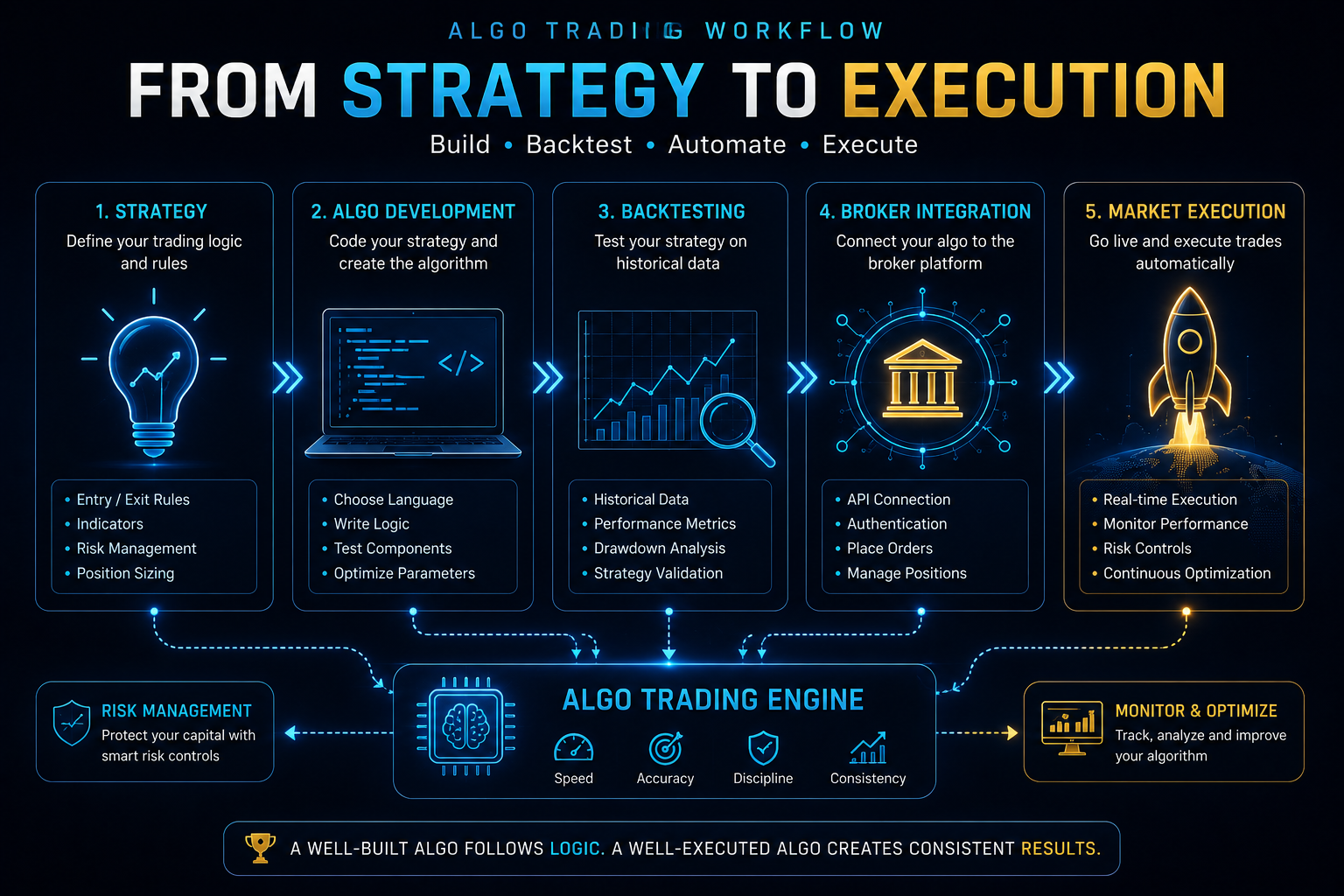
1. Define the Strategy Before Choosing the Technology
Start by selecting one market, one timeframe and one type of market behaviour. Your first strategy may focus on trends, breakouts, moving averages, momentum or another measurable pattern.
Read about algorithmic trading strategies for beginners before deciding what to build. The objective is not to create the most sophisticated strategy. It is to create one that you can explain and test.
Write the strategy in plain language. Identify the entry condition, exit condition, stop-loss rule, position size, trading hours and conditions under which no trade should be taken.
2. Convert the Idea Into Exact Trading Rules
Replace subjective statements such as “buy when the market looks strong” with precise instructions. Specify the data source, indicator settings, candle timing, entry trigger and invalidation condition.
Define the entry
State exactly what must happen before a trade is allowed. For example, the system may require a price to cross a moving average while volume and trend conditions meet predefined limits.
Define the exit
Every position needs an exit plan. Include profit targets, stop-losses, time-based exits and rules for closing a trade when the original setup disappears.
Define the no-trade conditions
A robust system also knows when not to trade. Low liquidity, unusual spreads, major events, missing data or a daily loss limit may all justify stopping new entries.
Comparing algorithmic trading versus manual trading can help clarify which decisions should remain under human supervision.
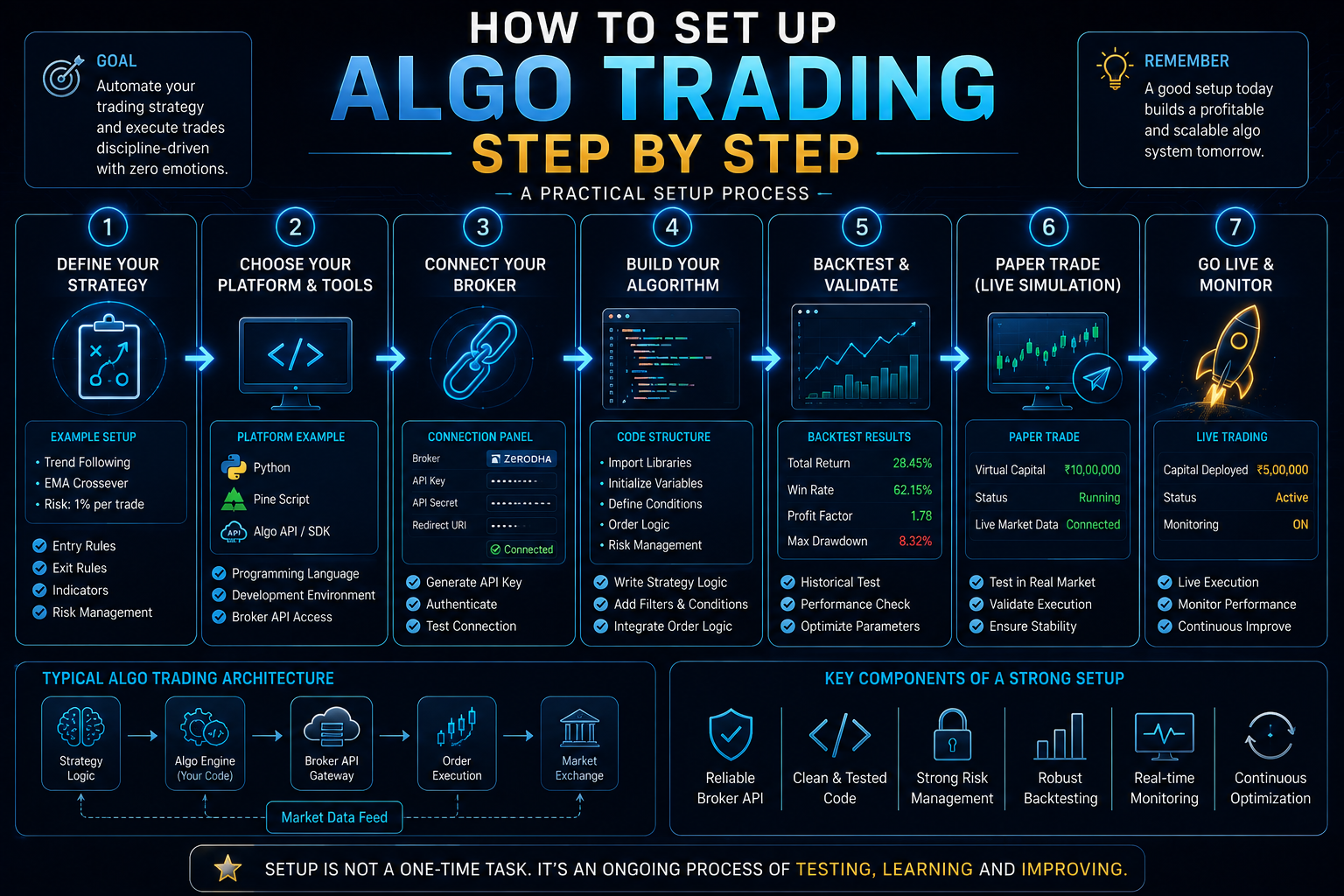
3. Choose the Right Algo Trading Setup
Once the rules are documented, choose the technology required to execute them. A beginner setup usually includes market data, a strategy engine, a broker or execution API, logging and a monitoring interface.
Review the differences between algorithmic trading software and a fully managed automated trading software solution. The right choice depends on your technical skills, budget, broker support and need for control.
Check whether the platform supports the instruments you trade, reliable data, order-status updates, authentication, error handling and a safe testing environment. Do not choose a platform only because it advertises high returns or “fully automatic profits.”
4. Backtest the Strategy Honestly
Backtesting evaluates how a strategy would have behaved on historical data. It helps identify weaknesses before real money is exposed, but it does not guarantee future performance.
Use data that resembles the conditions in which the strategy will operate. Include brokerage charges, taxes, slippage, spread, delays and realistic position sizes wherever possible.
Separate the data used to develop the strategy from data used to evaluate it. Testing repeatedly until the results look attractive can create overfitting, where the system performs well on history but poorly in live markets.
Track more than total profit. Review drawdown, losing streaks, win rate, average win, average loss, trade frequency, exposure and performance across different market conditions.
5. Paper Trade Before Going Live
Paper trading allows you to test the complete workflow without immediately risking capital. It can reveal problems that a historical backtest cannot show, including delayed data, rejected orders, incorrect quantities and unexpected execution behaviour.
Use a paper-trading period to verify that signals are generated at the correct time, orders are sent only once, positions are updated correctly and exits work as intended.
Resources such as paper trading platforms, how paper trading helps beginners and improving paper-trading results can help structure this stage.
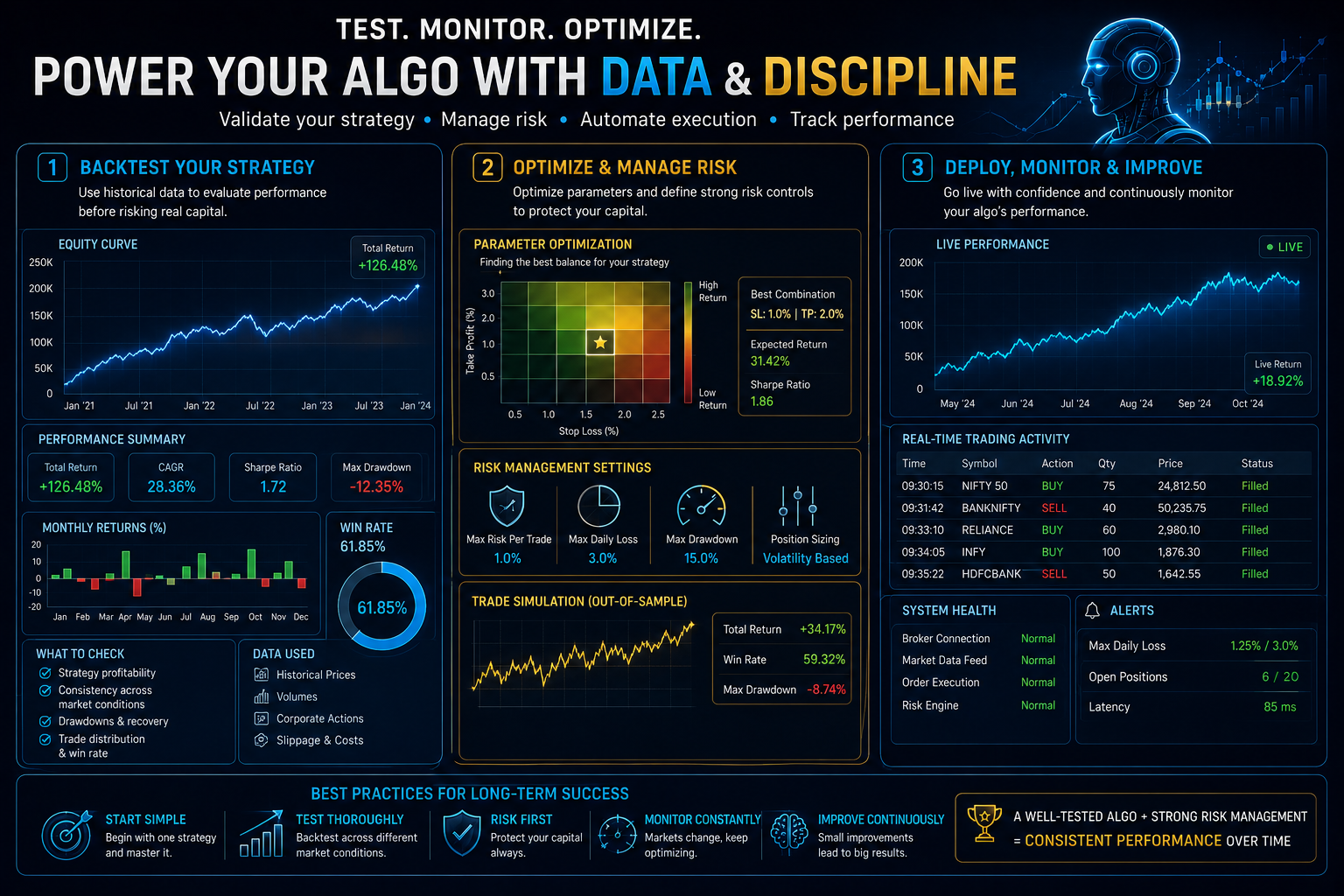
6. Add Risk Controls Before Real Trading
Risk management should be built into the system rather than added after a loss. Decide the maximum capital per trade, maximum daily loss, maximum open positions and maximum exposure to one instrument or sector.
Use position sizing rules that connect trade size to account capital and stop-loss distance. Review position sizing and daily loss limits before moving beyond simulation.
The system should also have an emergency stop, connection-failure handling, duplicate-order protection and a rule for what happens when market data becomes unavailable.
7. Launch Small and Monitor Continuously
When the strategy passes testing, begin with limited capital and a small number of instruments. The first live stage is mainly a technology and execution check, not a race to maximise returns.
Monitor orders, fills, rejected requests, latency, open positions, realised profit and loss, and differences between expected and actual execution. Maintain a detailed trading journal so every change can be reviewed.
Do not change multiple rules immediately after a losing trade. Review a meaningful sample of results, identify the cause of the issue and make one controlled adjustment at a time.
Relevant Stoxra Tools & Learning Resources
Use these Stoxra resources to research, test and improve your algorithmic trading workflow.
- 🤖 AI Trading Platform
Explore AI-assisted market research and trading workflows.
- ⚙️ Automated Trading
Software
Understand the features required to execute predefined strategies.
- 📊 AI Tools
for Stock Market Analysis
Compare tools that support research and analysis.
- 📈 Best Charting Tools in
India
Study price action, indicators and market structure.
- 📝 Best Paper Trading
Platforms
Practise execution without immediately risking capital.
- 📔 How to Build a
Trading Journal
Record signals, execution issues and performance.
Frequently Asked Questions
What is algo trading?
Algo trading uses predefined rules, code or automated systems to analyse markets and place orders. The system follows its programmed conditions instead of relying entirely on manual decisions.
Can beginners start algo trading in India?
Yes. Beginners can start by learning market basics, understanding order types, building a simple strategy and testing it through paper trading before considering live execution.
Do I need to know programming to set up algo trading?
Programming knowledge is useful for building and customising systems, but some platforms provide visual strategy builders, integrations or ready-made workflows. You should still understand the strategy and its risks.
Is algo trading profitable?
Algo trading is not automatically profitable. Results depend on the strategy, market conditions, execution quality, costs, risk controls and how well the system is tested.
Should I use real money immediately?
No. Start with historical testing and paper trading. Move to live trading only after the strategy has been reviewed, its risks are understood and position sizes are kept small.
The Bottom Line
Setting up algo trading is not just about connecting a strategy to a broker. It is about building a repeatable process with clear rules, reliable testing, disciplined execution and strong risk controls. Start small, validate every assumption and improve the system only when the evidence supports it.
Keep Building Your Trading Foundation
Before moving to advanced automated systems, strengthen your understanding of market basics, technical analysis, paper trading, position sizing and trading journals. These foundations help you evaluate strategies more objectively and make better decisions when real money is involved.
Automation can improve consistency, but it cannot remove market risk. A well-tested strategy and disciplined risk management matter more than complexity.
This article is for educational purposes only and does not constitute investment advice. Trading and investing involve risk, and past or simulated performance does not guarantee future results.