Advantages and Disadvantages of Commodity Trading
Commodity trading can offer diversification, inflation protection and opportunities across gold, crude oil, natural gas and agricultural commodities. Learn its key advantages, risks and practical considerations before trading.
Advantages and Disadvantages of Commodity Trading
Commodity trading is an important part of the global financial market. From gold and silver to crude oil, natural gas and agricultural products, commodities are traded by participants around the world.
Unlike stocks, commodities represent physical assets or financial contracts linked to physical goods. Their prices are influenced by supply and demand, inflation, interest rates, geopolitical events, weather conditions, currency movements and global economic activity.
Commodity trading can provide diversification and opportunities from changing market conditions, but it also comes with volatility, leverage and other risks.
What Is Commodity Trading?
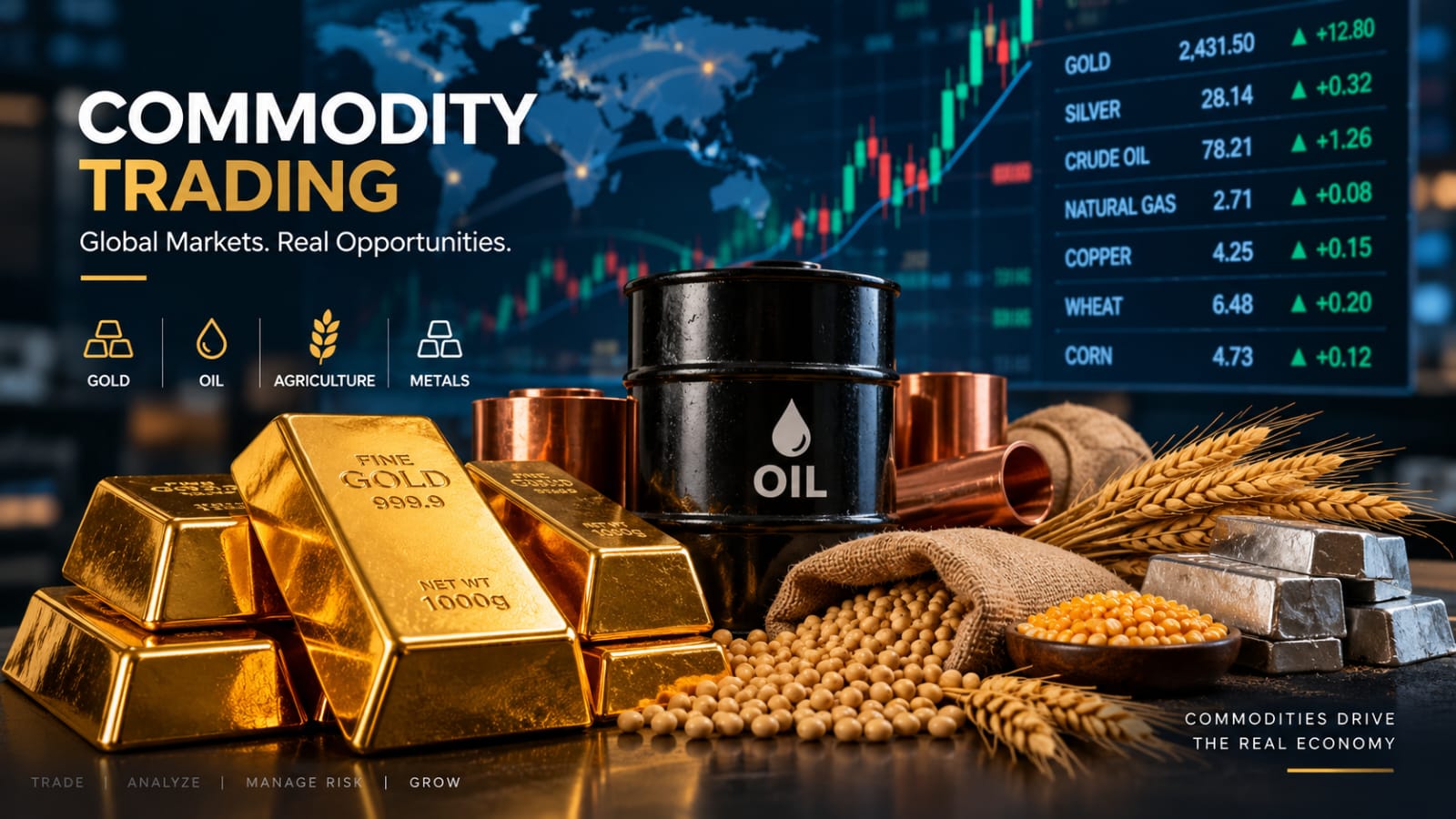
Commodity trading refers to buying and selling commodities or financial instruments whose value is connected to commodities.
Depending on the market, traders can gain commodity exposure through futures, options, exchange-traded products and other financial instruments.
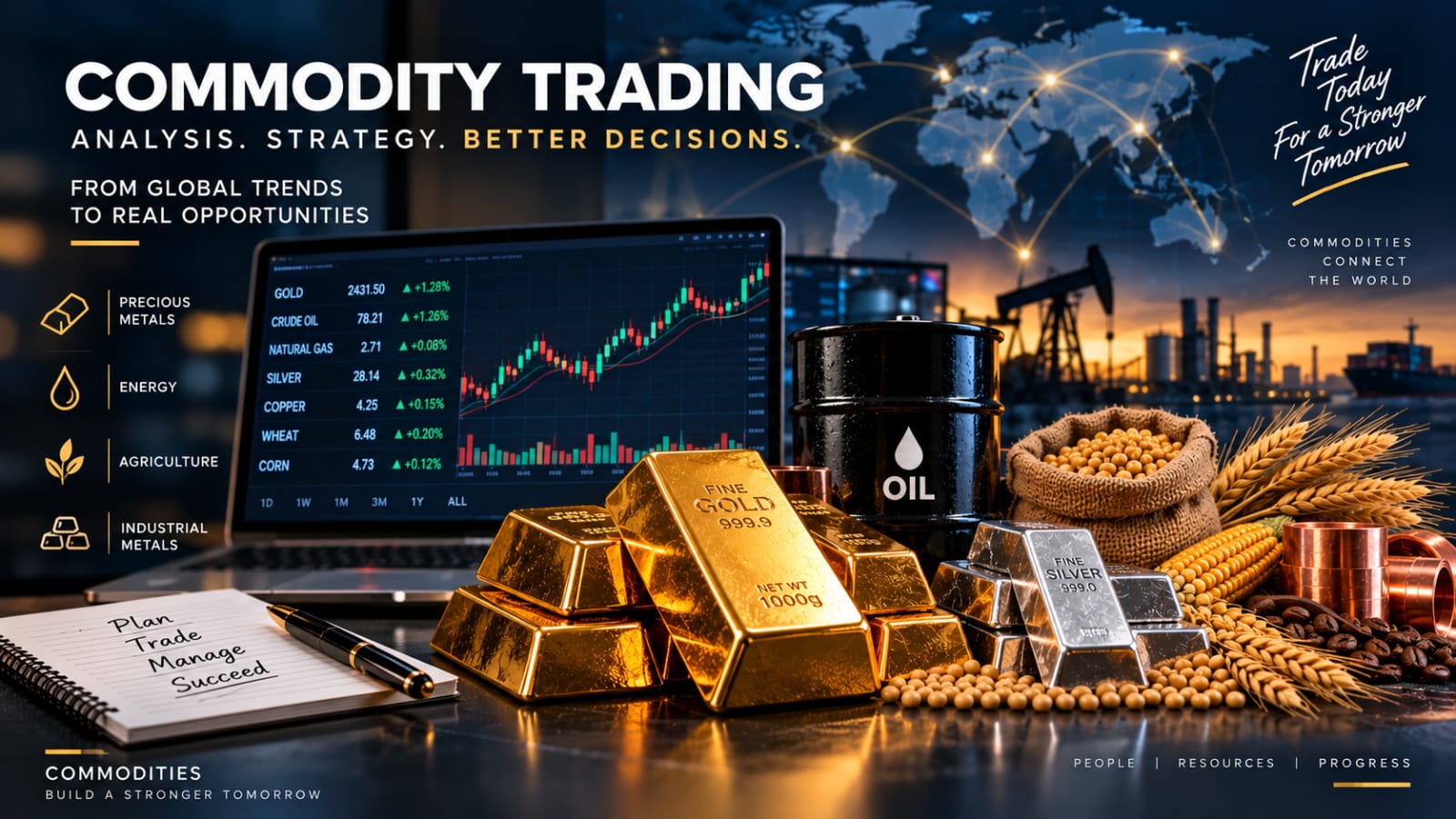
Common commodities include gold, silver, crude oil, natural gas, copper, wheat, corn and other agricultural products.
Each commodity has its own market characteristics. For example, crude oil can be strongly affected by production and geopolitical events, while agricultural commodities can be highly sensitive to weather and seasonal conditions.
Advantages of Commodity Trading
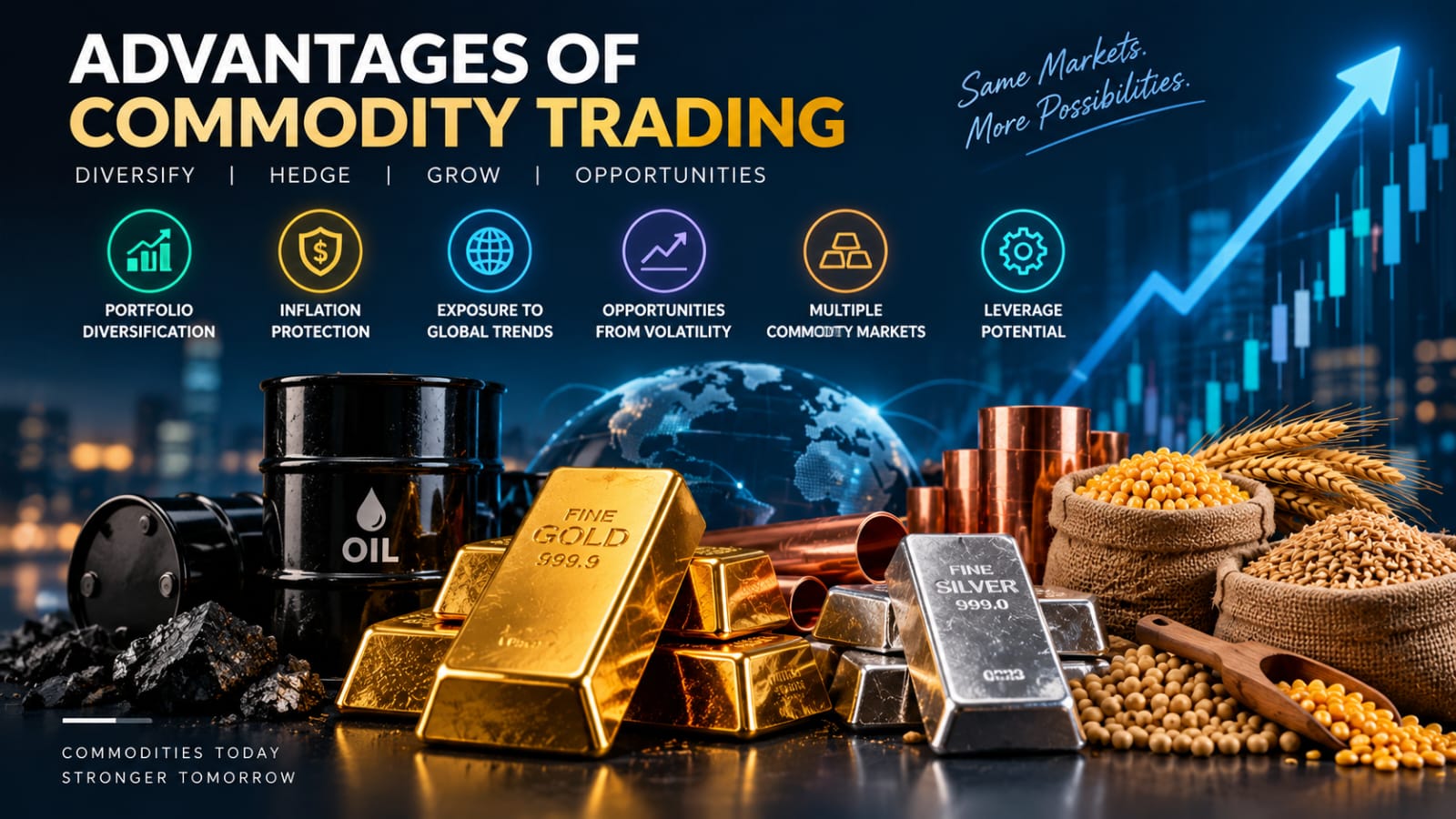
Commodity markets offer several potential advantages for traders and investors. Understanding these benefits can help market participants determine whether commodity exposure fits their overall strategy.
1. Portfolio Diversification
One of the major advantages of commodity trading is the potential for diversification.
Commodities can behave differently from traditional assets such as stocks and bonds because their prices are strongly influenced by physical supply and demand.
Exposure to different asset classes can help create a more diversified portfolio, although diversification does not eliminate investment risk.
2. Potential Inflation Protection
Certain commodities can benefit during periods of rising prices and inflation because commodities are inputs into many goods and services.
Gold is also widely followed during periods of economic uncertainty and inflation concerns.
However, commodities do not automatically rise whenever inflation increases. Their performance depends on many other market factors.
3. Exposure to Global Economic Trends
Commodity markets provide exposure to major global economic trends.
Increasing industrial activity can influence demand for metals such as copper. Changes in transportation and economic activity can affect crude oil demand, while agricultural production can influence crop prices.
This makes commodity markets interesting for traders who follow global economic developments and supply-and-demand conditions.
4. Opportunities From Market Volatility
Commodity prices can experience significant movements due to geopolitical events, production disruptions, weather conditions, inventory changes and shifts in global demand.
These movements can create opportunities for active traders. However, volatility works in both directions and can also result in significant losses.
5. Multiple Commodity Categories
Commodity markets cover several major categories:
- Precious metals: Gold and silver.
- Energy: Crude oil and natural gas.
- Industrial metals: Copper and other metals.
- Agricultural commodities: Wheat, corn and other agricultural products.
Each category responds to different economic and fundamental factors, giving traders multiple markets to analyse.
6. Leverage and Capital Efficiency
Commodity futures and options can provide leveraged exposure to commodity prices.
Leverage can allow traders to control a larger position with a smaller amount of initial capital.
However, leverage also increases risk. A relatively small adverse price movement can produce a significant loss.
Disadvantages of Commodity Trading
Commodity trading also involves several disadvantages and risks. Traders should understand these factors before entering a commodity position.
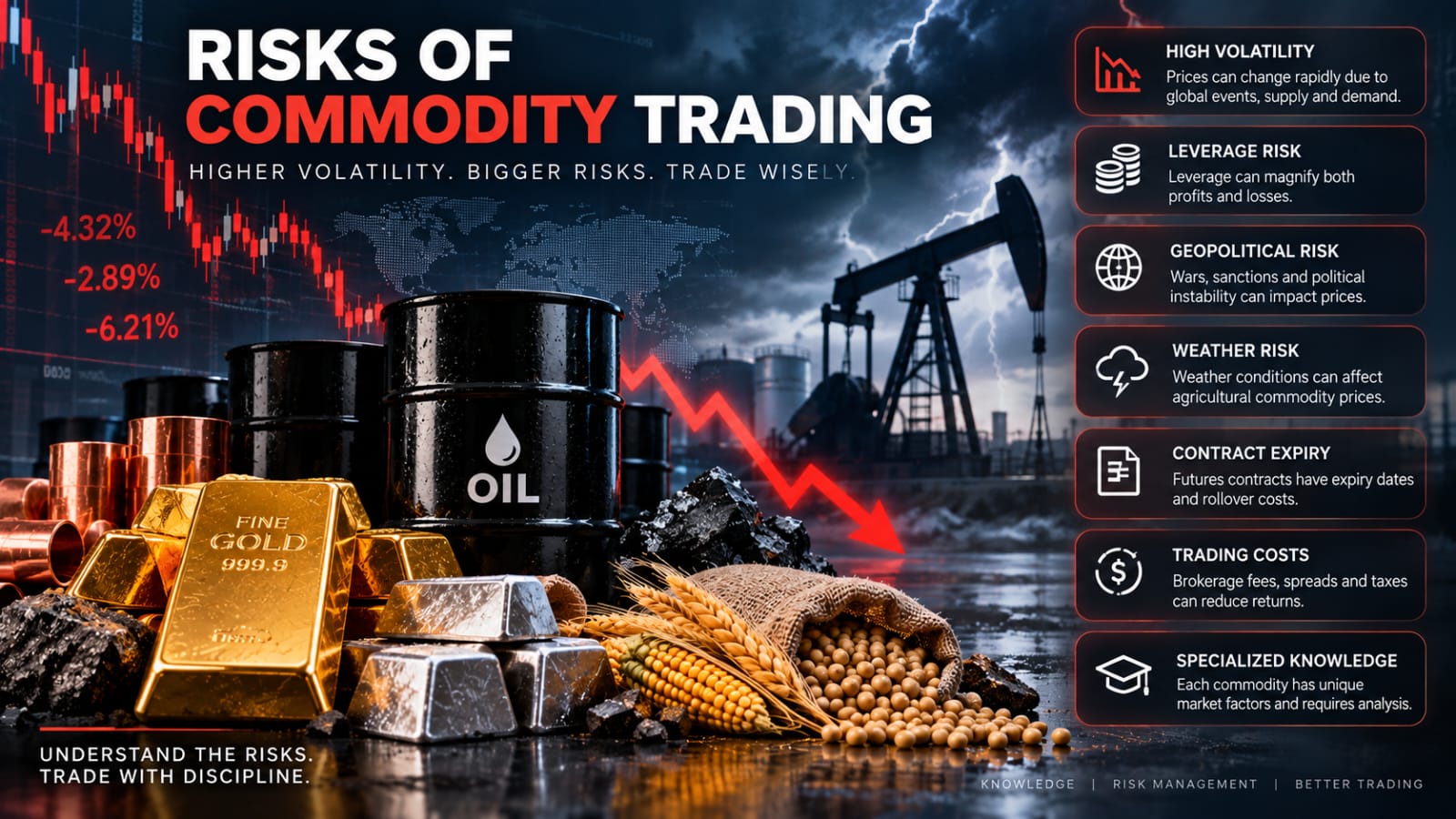
1. High Price Volatility
Commodity prices can change rapidly. Unexpected developments in supply, demand, geopolitics, weather or inventories can cause sharp price movements.
High volatility can increase potential returns, but it can also produce substantial losses.
Traders should therefore use appropriate position sizing and risk controls.
Learn more about reducing drawdown risk and maintaining disciplined risk management.
2. Leverage Can Magnify Losses
Leverage is one of the most important risks in commodity derivatives.
While leverage can increase capital efficiency, it can also magnify losses when the market moves against a position.
Traders should never use leverage without understanding margin requirements and the potential downside.
3. Supply and Demand Uncertainty
Commodity markets depend heavily on physical supply and demand. Unexpected changes in production or consumption can significantly affect prices.
A production disruption can reduce supply, while weaker global demand can put downward pressure on prices.
4. Geopolitical Risk
Geopolitical events can have a major impact on commodity markets.
Wars, sanctions, trade restrictions and political instability can disrupt production, transportation and international trade.
These events can create sudden price movements that are difficult to predict.
5. Weather and Seasonal Risk
Agricultural commodities are particularly sensitive to weather and seasonal conditions.
Droughts, floods, extreme temperatures and other environmental conditions can affect crop production and consequently influence commodity prices.
6. Futures Expiry and Rollover
Commodity futures contracts have specific expiry dates.
Traders who want to maintain exposure beyond expiry may need to move their position into another contract. This process is known as rollover.
Rollover can introduce additional costs and pricing considerations.
Understanding options rollover can also help explain the broader concept of moving positions between contracts.
7. Trading Costs
Brokerage charges, exchange fees, taxes, spreads and other transaction costs can reduce trading returns.
Frequent trading can increase the effect of these costs over time.
8. Requires Specialized Knowledge
Different commodities are influenced by different fundamental factors.
A trader analysing crude oil may need to understand production, inventories and geopolitical developments, while an agricultural commodity trader may need to follow weather and crop data.
Therefore, successful commodity analysis requires more than simply looking at a price chart.
Commodity Trading vs Stock Trading
Commodity trading and stock trading have important differences.
- Stocks generally represent ownership in a company.
- Commodities represent physical goods or financial contracts linked to those goods.
- Stock prices are heavily influenced by company earnings and business performance.
- Commodity prices are strongly influenced by supply and demand.
- Commodity derivatives commonly involve leverage and contract expiry.
Neither market is automatically better. The appropriate choice depends on the trader's objectives, knowledge, risk tolerance and strategy.
What Factors Affect Commodity Prices?
Several factors can influence commodity prices. Understanding these factors is an important part of commodity market analysis.
Supply and Demand
Supply and demand are among the most important drivers of commodity prices. A shortage of supply can support prices, while excess supply can put downward pressure on prices.
Inflation
Inflation can influence commodity prices because many commodities are directly connected to the production and transportation of goods and services.
Interest Rates
Changes in interest rates can influence currency values, investment flows and the overall economic environment, which can affect commodity markets.
Geopolitical Events
Geopolitical developments can disrupt supply chains and production, particularly in energy markets.
Weather
Weather conditions can have a major influence on agricultural commodities by affecting crop production and supply expectations.
Currency Movements
Many globally traded commodities are priced in U.S. dollars. Changes in the value of the dollar can therefore affect commodity prices and the cost of commodities for international participants.
How to Manage Risk in Commodity Trading
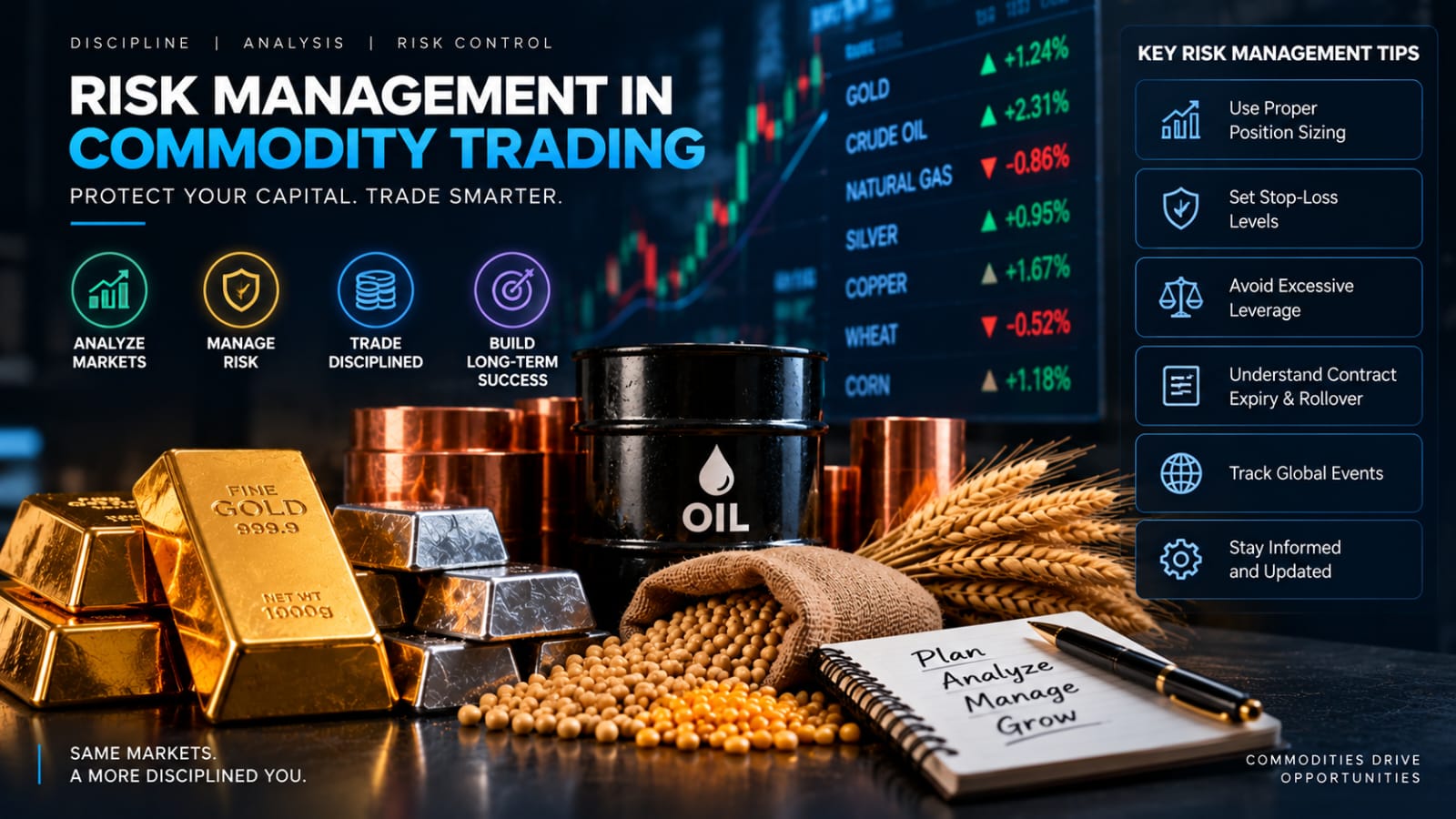
Risk management should be an essential part of every commodity trading strategy.
- Use appropriate position sizing: Avoid putting an excessive amount of capital into a single trade.
- Define your maximum acceptable loss: Decide the amount of risk before entering the position.
- Use stop-loss levels when appropriate: A predefined exit level can help control downside risk.
- Avoid excessive leverage: Higher leverage increases the impact of market movements.
- Understand the commodity: Study the fundamental factors that influence its price.
- Consider volatility: Position size should reflect the volatility of the market.
- Maintain discipline: Avoid making emotional decisions after winning or losing trades.
Trading psychology is also important because fear, greed, overconfidence and revenge trading can affect decision-making.
Read more about trading psychology and why it matters .
Common Commodity Trading Mistakes
Traders can make several common mistakes when participating in commodity markets.
- Using excessive leverage.
- Trading without a defined risk limit.
- Ignoring contract expiry.
- Ignoring rollover costs.
- Entering trades based only on news headlines.
- Ignoring transaction costs.
- Taking positions that are too large.
- Making emotional decisions after losses.
- Assuming past performance guarantees future results.
A structured trading process can help reduce these mistakes. Traders can combine fundamental analysis, technical analysis, market context and disciplined risk management.
Key Takeaway
Commodity trading offers several potential advantages, including diversification, exposure to global economic trends, multiple trading opportunities and potential benefits during certain inflationary environments.
However, commodity markets can also be highly volatile. Leverage, geopolitical events, supply disruptions, weather conditions, contract expiry and trading costs can create significant risks.
The goal should not simply be to find a profitable commodity trade. Traders should understand the market, control position size and manage risk before entering a position.
Frequently Asked Questions
What are the main advantages of commodity trading?
The main advantages include diversification, exposure to global economic trends, multiple commodity markets and opportunities created by price volatility.
What are the disadvantages of commodity trading?
Major disadvantages include high volatility, leverage risk, geopolitical uncertainty, supply and demand changes, contract expiry and trading costs.
Is commodity trading risky?
Yes. Commodity trading can involve substantial risk, especially when futures, options or other leveraged instruments are used.
Can commodities help protect against inflation?
Some commodities may perform well during certain inflationary periods, but commodity prices do not always increase with inflation. Therefore, commodities should not be considered a guaranteed inflation hedge.
Which commodities are commonly traded?
Common commodities include gold, silver, crude oil, natural gas, copper, wheat, corn and other agricultural products.
Is commodity trading suitable for beginners?
Beginners should first learn how commodity markets work, understand leverage and contract specifications, and develop a clear risk management plan before trading with real money.
Conclusion
Commodity trading provides access to a wide range of markets, including precious metals, energy, industrial metals and agricultural commodities.
It can provide diversification and opportunities from global economic trends, but these benefits come with meaningful risks.
Commodity prices can change rapidly because of supply and demand, geopolitical developments, weather, inflation, interest rates and currency movements.
Understanding the advantages and disadvantages of commodity trading is therefore essential before taking a position.
Traders should focus on appropriate position sizing, controlled leverage, disciplined execution and a clear risk-management framework.
Commodity trading should be approached as a structured financial activity rather than a guaranteed method of making quick profits.
Explore More Trading Guides
Continue learning about trading, risk management and market analysis with more educational resources from Stoxra.
Disclaimer
This article is provided for educational and informational purposes only. It does not constitute investment advice, financial advice, trading advice or a recommendation to buy or sell any security, commodity, derivative or financial instrument.
Commodity trading, futures and options can involve substantial risk, including the possibility of significant financial loss. Readers should conduct their own research, understand the applicable risks and consider consulting a qualified financial professional before making investment or trading decisions.