What Is a Trading Bot and How Does It Work
Learn what a trading bot is, how trading bots work, how they generate signals, execute orders, manage risk, and why testing is important before using automation.

What Is a Trading Bot?
A trading bot is a software application designed to automate parts of the trading process. Instead of manually watching charts, checking market conditions, calculating indicators, and placing orders, a bot can perform these tasks according to rules defined by the strategy.
Trading bots are commonly associated with algorithmic trading because they use a set of instructions to process market information and make decisions. The instructions may be based on technical indicators, price movements, volume, volatility, time-based rules, or combinations of several market conditions.
A simple example could be a strategy that looks for a moving-average crossover. If a short-term moving average moves above a long-term moving average, the strategy may generate a potential buy signal. When the opposite condition occurs, it may generate a potential sell signal.
However, a trading bot does not automatically make a strategy profitable. The quality of the strategy, data, execution, risk controls, costs, and market conditions all matter.
Beginners can first understand the broader concept through algorithmic trading in simple terms .
Key Takeaway
A trading bot automates a trading strategy; it does not magically predict the market. A bot can follow rules consistently and quickly, but the underlying strategy still needs research, testing, monitoring, and proper risk management.
How Does a Trading Bot Work?
A trading bot generally works through a sequence of connected steps. It receives market data, processes that information, checks the rules of a strategy, generates a signal when the conditions are satisfied, and may then send an order through a supported trading system.
1. Market Data
The bot receives information such as price, volume, market trends, or technical indicator values.
2. Strategy Rules
The bot compares current market conditions with predefined conditions from the trading strategy.
3. Signal Generation
When the required conditions are satisfied, the system can generate a buy, sell, exit, or no-trade signal.
4. Risk Checks
Position size, stop-loss rules, exposure limits, and other risk controls can be checked before an order is considered.
5. Order Execution
If the system is connected to a supported trading infrastructure, it can send an order according to the strategy rules.
6. Monitoring
The bot can monitor positions and market conditions and apply predefined exit or adjustment rules.
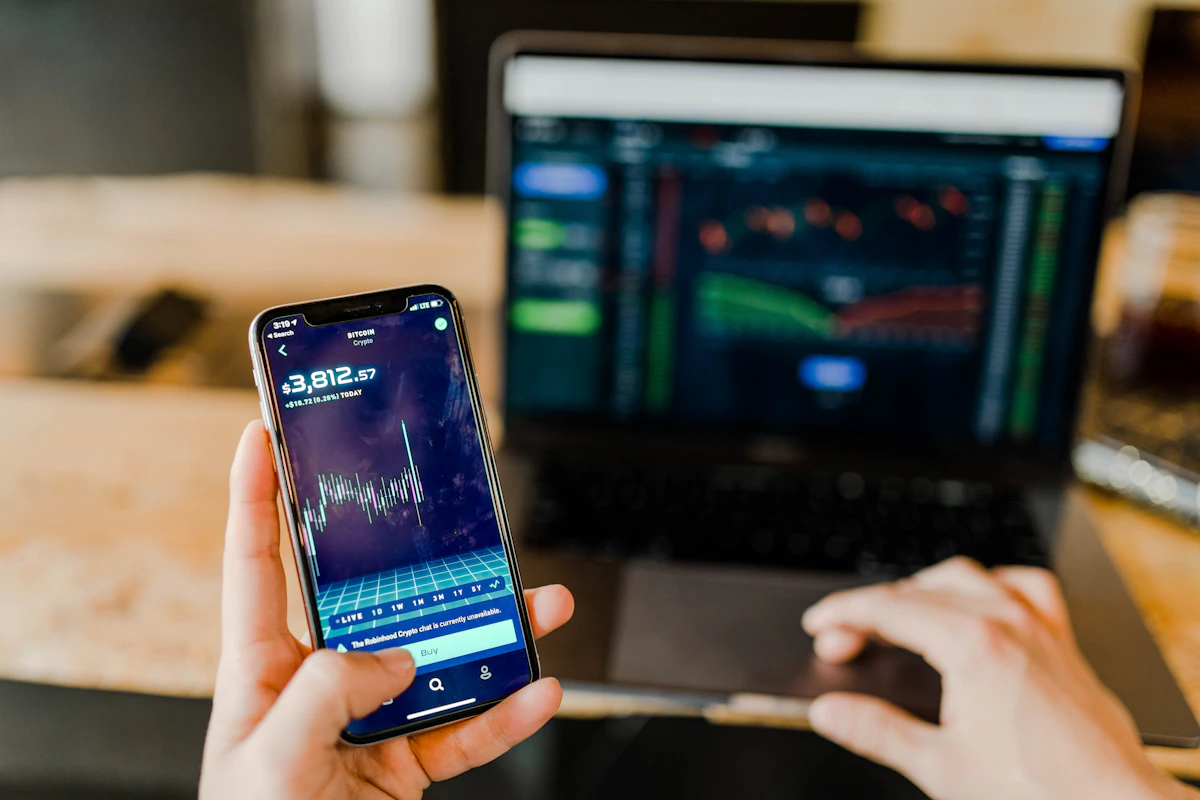
The Basic Trading Bot Workflow
The easiest way to understand a trading bot is to look at its complete workflow. Automation does not remove the need for a strategy. Instead, it converts a strategy into a sequence of instructions that software can execute consistently.
Market Data
↓
Data Processing
↓
Strategy Conditions
↓
Trading Signal
↓
Risk Check
↓
Order Execution
↓
Position Monitoring
For example, a bot may continuously check whether an asset has moved above a specified moving average while volume meets a predefined condition. If the complete rule set is satisfied, the bot can create a signal. Before execution, additional risk rules can determine whether the trade should actually be placed.
This systematic approach is one reason algorithmic trading is useful for traders who want to reduce repetitive manual tasks.
What Does a Trading Bot Use to Make Decisions?
Trading bots can use many different types of inputs. The exact inputs depend on the strategy being automated.
- Price and historical price data
- Trading volume
- Moving averages
- RSI and other momentum indicators
- Volatility measurements
- Support and resistance levels
- Breakout conditions
- Time-based rules
- Portfolio exposure
- Risk and position-sizing rules
Some advanced systems may also use machine learning or other data-driven techniques. These systems can process larger datasets and identify relationships that may be difficult to monitor manually. However, machine learning does not eliminate uncertainty from financial markets.
Traders interested in this area can also explore how AI is changing algorithmic trading strategies .

Trading Bot vs Manual Trading
Manual trading requires the trader to observe the market, interpret information, decide whether a setup matches the strategy, and place or manage orders. A trading bot can automate many of these repetitive activities.
| Factor | Manual Trading | Trading Bot |
|---|---|---|
| Decision process | Trader-driven | Rule-driven |
| Speed | Depends on trader | Can process rules quickly |
| Consistency | Can vary with emotions | Follows programmed rules |
| Monitoring | Requires human attention | Can monitor predefined conditions |
| Flexibility | High human judgment | Limited by programmed logic |
Automation can reduce repetitive work, but human oversight remains important. A bot can only operate within the rules and technical conditions it has been designed to handle.
Read more about the differences in algorithmic trading vs manual trading .
What Are the Main Types of Trading Bots?
Trading bots can be classified according to the strategy they follow. Different bots are designed for different market conditions and objectives.
Trend-Following Bots
These bots attempt to follow an existing market trend. They may use moving averages, momentum indicators, breakouts, or other trend measurements.
Mean-Reversion Bots
Mean-reversion systems are based on the idea that prices may move toward an average or typical range after becoming relatively extended. Such strategies need careful testing because markets can remain away from historical averages for extended periods.
Breakout Bots
Breakout bots monitor predefined price levels and may generate signals when price moves beyond those levels.
Arbitrage Bots
Arbitrage systems attempt to identify price differences between related markets or instruments. Execution speed and transaction costs can be particularly important for these systems.
AI and Machine Learning Bots
More advanced systems may use machine learning models to process historical or real-time data. These systems require careful model validation because a model that performs well on historical data may not necessarily perform well in future market conditions.
You can also learn about common algorithmic trading strategies before exploring more complex automation.

How Do Trading Bots Execute Orders?
A trading bot needs an execution mechanism if it is expected to place live orders. In a typical automated setup, the strategy produces a signal and an order-management component prepares the required order details.
Depending on the system, these details can include the instrument, order direction, quantity, order type, price conditions, and risk parameters.
The trading infrastructure then processes the request. Execution can be affected by factors such as market liquidity, order type, connectivity, latency, transaction costs, and changing prices.
This is why having a signal is not the same as successfully executing a trade at the expected price.
Traders can learn more about the technical side of automation through how algorithmic trading bots work in India .
Why Risk Management Is Important for Trading Bots
Automation can make a strategy more consistent, but it can also make mistakes happen consistently if the strategy or implementation is incorrect. This makes risk management an important part of bot design.
- Define maximum position size
- Set acceptable loss limits
- Use predefined stop-loss rules where appropriate
- Control total market exposure
- Monitor drawdowns
- Consider transaction costs
- Have rules for unusual market conditions
- Monitor technical failures and connectivity problems
A strategy can produce attractive historical results while still carrying significant risk. Risk controls should therefore be tested alongside the strategy rather than added as an afterthought.
For additional learning, read how algo trading helps with risk management and what a trailing stop-loss is .

Why Backtesting Matters Before Using a Trading Bot
Backtesting means evaluating a trading strategy against historical market data to understand how the rules would have performed during previous market conditions.
For a trading bot, backtesting can help identify potential weaknesses before a strategy is considered for real-world use. Traders can examine metrics such as returns, drawdowns, winning and losing trades, trade frequency, and risk-adjusted performance.
However, backtesting has limitations. Historical results do not guarantee future performance. A strategy may also appear stronger than it really is because of overfitting, unrealistic assumptions, missing transaction costs, or execution differences.
Learn the fundamentals in What Is Backtesting an AI Trading Strategy .
Advantages of Using Trading Bots
Consistency
Bots can follow the same predefined rules without changing the decision because of fear, excitement, or hesitation.
Speed
Software can process predefined conditions much faster than manual observation in many situations.
Reduced Repetition
Repetitive monitoring and rule-based actions can be automated, allowing traders to focus more on strategy design and review.
Systematic Execution
A properly designed system can apply the same entry, exit, and risk rules across trades.
Limitations and Risks of Trading Bots
Trading bots are not guaranteed-profit machines. They operate according to programmed logic, and that logic can fail when market conditions change or when technical assumptions are incorrect.
- Historical performance may not continue in the future.
- Strategies can become overfit to historical data.
- Transaction costs can reduce actual returns.
- Unexpected market conditions can affect strategy performance.
- Software bugs can produce unintended actions.
- Connectivity or infrastructure failures can interrupt execution.
- Incorrect risk settings can increase losses.
- Automation does not remove market risk.
AI-based systems have additional challenges because complex models can be difficult to validate and explain. A strong testing process and ongoing monitoring are therefore important.
For a broader perspective, see whether AI can analyze stocks better than humans .

Trading Bots and AI: What Is the Difference?
A trading bot and an AI trading system are not necessarily the same thing. A basic trading bot may simply execute clearly defined instructions such as buying when a condition is met and exiting when another condition occurs.
An AI system may use machine learning or other computational methods to analyze larger datasets and identify patterns or relationships. AI can therefore be one component inside a broader automated trading system.
In simple terms, automation answers the question: "Can software follow these rules?"
AI may help answer: "Can a model learn useful relationships from data?"
These concepts overlap, but they should not be treated as identical.
Learn more through how AI is transforming stock market trading in India .
How Beginners Can Learn Trading Bots Safely
Beginners should focus on understanding the strategy before focusing on automation. A good learning process starts with basic market concepts, strategy rules, risk management, and historical testing.
- Learn the basics of financial markets.
- Understand technical indicators and trading rules.
- Define a simple strategy in plain language.
- Convert the rules into measurable conditions.
- Backtest the strategy using historical data.
- Review drawdown, losses, costs, and consistency.
- Use paper trading to observe the strategy without immediately risking real money.
- Monitor results and improve the strategy carefully.
Paper trading can be useful for learning how an automated strategy behaves before considering real-money execution. Read paper trading vs real trading and best paper trading platforms in India .
20+ Stoxra Resources to Continue Learning
Learn Trading and Test Your Ideas With Stoxra
Understanding trading bots is only the first step. The next step is learning how strategies behave, testing ideas systematically, and improving your understanding of risk before making decisions.
Explore Stoxra AI TradingFrequently Asked Questions
Disclaimer
This article is for educational and informational purposes only. It is not investment, trading, financial, or legal advice. Trading and investing involve risk, and past or backtested performance does not guarantee future results. Readers should conduct their own research and consider professional advice where appropriate.